When glyphosate doesn’t work on volunteer canola, there’s CALLISTO®
Managing volunteer canola in the cereal phase can be a tricky proposition, especially where RoundUp Ready varieties negate the effectiveness of glyphosate applications in the fallow phase.
In these circumstances, advisors and growers have recently found that adding CALLISTO® pre-emergent herbicide to their pre-plant program effectively targets those canola volunteers to reduce crop competition.
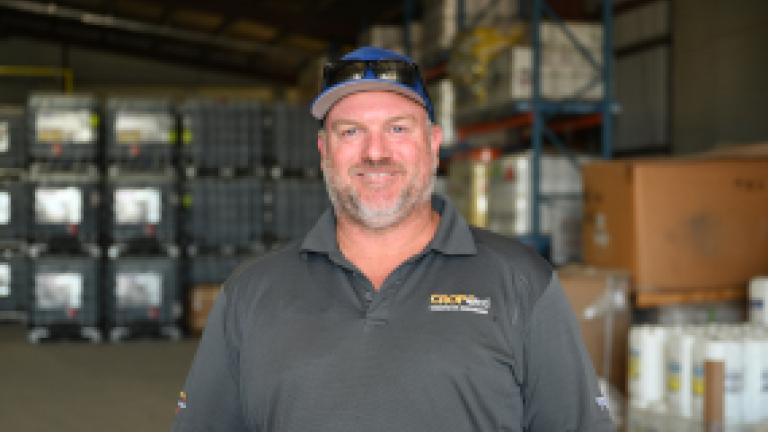
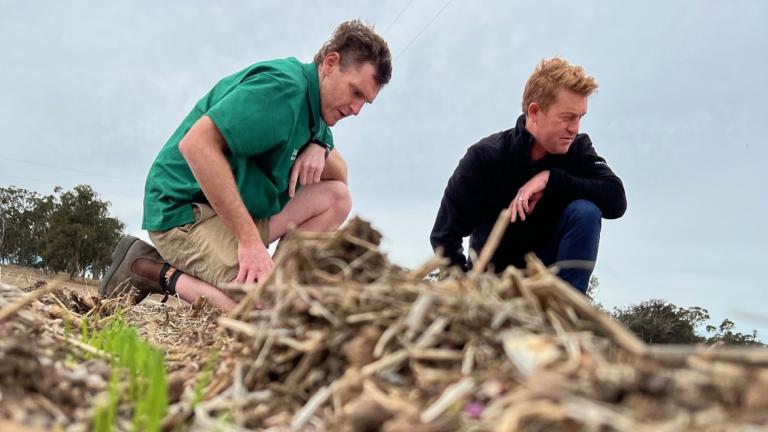
Nutrien Ag Solutions Agronomist Lachie Bigglin has seen the benefits of adding CALLISTO® to their grower programs lately, in the Kojunup region of Western Australia.
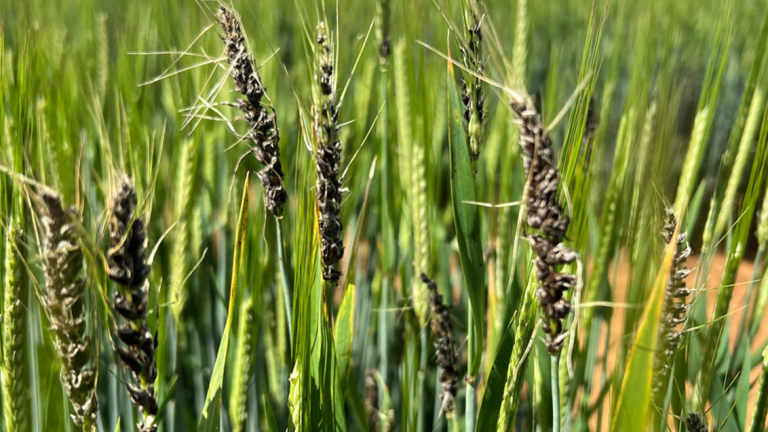
“This year in particularly we saw a lot of bleaching of the volunteer canola, in those paddocks where we used CALLISTO®,” he said.
“I reckon it’s also stopped a lot of it from coming up.”
Belonging to the Group 27 (H) mode of action, CALLISTO® pre-emergent herbicide has control claims for many problem weeds including populations resistant to group 2(B), 3(D), 4(I), 5&6(C) and 12(F) herbicides.
Its control of capeweed made it a welcome addition in parts of Western Australia, yet it’s efficacy on Brassicaceae types including canola and wild radish has surprised some.
Aside from the occasional lupin or faba bean crop, Mr Bigglin said the rotation in his area was very much wheat or barley, following canola.
“Historically we’d have used Diuron® in our pre-em brews,” he said.
“We’re really chasing that early kill in the pre-em phase now, to help set the crop up and get it going, using a CALLISTO®, Sakura*, trifluralin brew.
“Looking at our options, we wanted to push out that first in-crop spray as far as we could from a logistics perspective to buy some time.
“That’s getting us out from a three-leaf to maybe five-leaf for that post-em with something like a Jaguar* or LVE MCPA, which helps logistically and it’s economical.”
Mr Bigglin said the results from his 2024 pre-em program were all the more impressive given the absence of any real knockdown activity in the fallow phase.
For a second year, a lack of rainfall in the summer leading up to planting meant there was little to no germination of broadleaf weeds, or volunteer canola, that would ordinarily trigger knockdown applications.
“All our cereals, we seeded dry. Without a knockdown we were all a bit worried about how heavy the weed burden was going be early in-crop,” Mr Bigglin said.
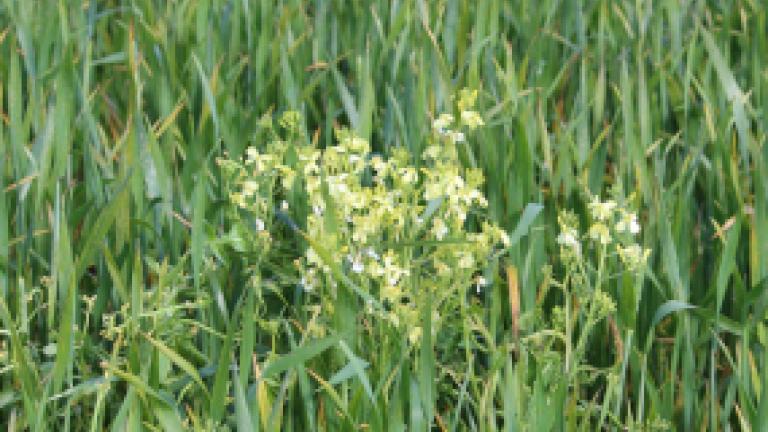
“We saw mats of [volunteer] canola coming up in paddocks where there been no knockdown or effective broadleaf pre-ems used.
“You could tell which paddocks had got a good broadleaf pre-em brew, and those that hadn’t, they were filthy.”
Mr Bigglin said volunteer canola management was real challenge given the small seed size, coming out the back of headers at harvest, with some paddocks proving very difficult.
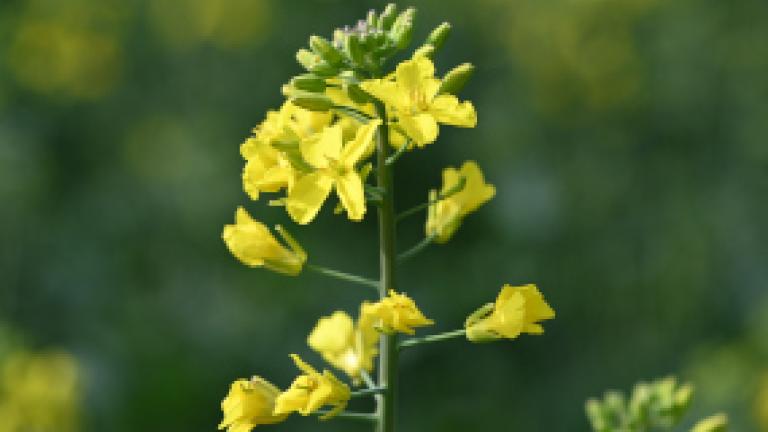
“In those paddocks where we used CALLISTO® the [volunteer] canola has still come up, but it was real sick, pale and bleached, but it was enough to get the barley going,” he said.
As with many pre-ems, crop safety can be a cause for concern. Farmers in the area run tynes on anywhere from a 150-300 millimetre spacing, with full soil disturbance.
“Where we’ve used the CALLISTO®, Sakura* and trifluralin mix, often the only weeds we’re seeing are in the furrow and the interrows are pretty clean,” Mr Bigglin said.
“Even the ones coming up on the edge of the furrow, are definitely picking up a bit of the herbicide as they turned purple, being bleached.“
"This year we had about 5-10 mm of rain on top of it, we saw a bit of movement of the product.
“In our wettest areas we’ll see a little bit of crop bleaching sometimes but not to the extent that I would expect it to knock yields.”
Certainly nothing to deter him from using a full rate of CALLISTO®.
“We’ve never played around with anything less than the 200mL/Ha rate, we're not overly worried about crop safety here.”
Click here for more information about CALLISTO® or speak to your local Syngenta representative.
ENDs
Syngenta is a leading agriculture company helping to improve global food security by enabling millions of farmers to make better use of available resources. Through world class science and innovative crop solutions, our 28,000 people in over 90 countries are working to transform how crops are grown. We are committed to drive positive change in agriculture and embed sustainability across all aspects of our business.
® Registered trademark of a Syngenta Group company.
* Registered trademark.