Reduced SDHI sensitivity in barley loose smut: what growers need to know
Why loose smut can be hard to spot
Researchers at Curtin University’s Centre for Crop and Disease Management (CCDM) have identified a genetic mutation in the loose smut pathogen, Ustilago tritici (syn. U. nuda), associated with reduced sensitivity to Group 7 SDHI fungicides.
The finding, reported by the Grains Research and Development Corporation (GRDC), was detected in samples from New South Wales, Queensland and Western Australia collected between 2021 and 2025. While reduced fungicide performance has been reported in some areas and barley varieties, this should not be interpreted as widespread failure of seed treatments.
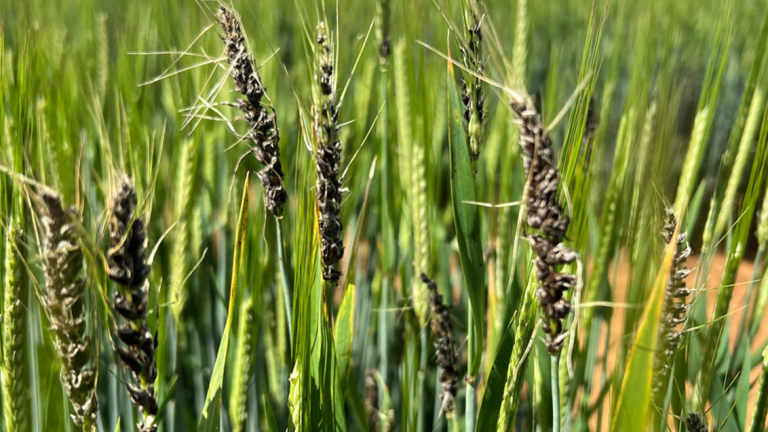
Loose smut is carried inside infected barley seed. Plants can look healthy until heading, when the grain head is replaced by a dark mass of spores. The spores are released around flowering and can infect nearby plants, allowing the disease to carry over into retained seed.
Because infection is held inside the developing seed, a harvested grain sample can appear clean even when infection is present. If loose smut appears at heading, growers should record where it occurs and consider the implications before retaining seed from that crop.
CCDM Director Professor Mark Gibberd has described the finding as a reason for “awareness, not alarm”. Current management tools remain useful when applied appropriately but protecting them requires an integrated approach.
Start with the seed lot
The first decision is whether the seed lot is suitable to retain. Where loose smut was present in the source crop, particularly at high levels, sourcing clean or certified seed may be a better option than relying on treatment alone.
Current label guidance notes that infection associated with more than five loose smut-infected heads in every 100 heads may not be adequately controlled by seed treatment alone. Grading seed to remove grain smaller than 2.5mm will also reduce levels of infection in the following crop.
Growers should combine seed source selection, suitable varieties for the production system, sound seed hygiene and a registered seed treatment applied according to label directions ensuring that all seeds are covered evenly as poor coverage across the seedlot can see a reduction in performance of any treatment against this seed-borne disease.
Use more than one line of defence
The new finding relates to reduced sensitivity to Group 7 SDHI fungicides. It does not indicate that every fungicide group is affected. Using a registered seed treatment with multiple relevant modes of action can reduce reliance on one fungicide group and support resistance stewardship.
VIBRANCE® contains sedaxane, a Group 7 SDHI, difenoconazole, a Group 3 DMI, and metalaxyl-M, a Group 4 fungicide. Sedaxane and difenoconazole provide activity against loose smut, while metalaxyl-M protects against Pythium species. VIBRANCE® is registered for the control of loose smut in barley.
VIBRANCE® also provides activity across smuts and bunts, supports management of rhizoctonia and protects against pythium, alongside benefits to seedling vigour and root health during establishment. The product’s low-dust, easy-handling formulation is designed to support consistent seed treatment flow and coverage.
This approach aligns with AFREN’s Fungicide Resistance Five: rotate crops, avoid susceptible varieties where practical, rotate or mix fungicide modes of action, apply fungicides according to need and use non-chemical measures such as clean seed and good hygiene.
Application quality protects performance
A suitable product can still be let down by poor application. NSW DPIRD pathologist Brad Baxter has emphasised the importance of using the correct product rate and water volume, keeping equipment well calibrated, mixing product thoroughly and maintaining a steady seed flow.
VIBRANCE® is registered in barley at 90–180 mL/100 kg seed. For loose smut management, Syngenta recommends applying the highest registered rate. This recommendation reflects the increasing prevalence of loose smut, including the widespread cultivation of more susceptible barley varieties, and the fact that infected seed cannot be reliably identified by visual inspection. Always consult the current product label and apply the rate, mixing volume and directions relevant to the seed lot and registered use.
Calibrate equipment between seedlots rather than relying on settings from a previous batch. During treatment, check seed flow, mixing and most importantly coverage of treated seeds so the intended dose is distributed evenly across the seed lot. Poor application can reduce disease control regardless of product choice.
The practical message is straightforward: inspect crops at heading, be selective about retained seed, grade seed, use registered products according to the label, inspect treated seed for coverage evenness and favour multiple effective modes of action and pay close attention to application quality.
Click here for more information on VIBRANCE® or contact your local Syngenta representative.
Sources
Grains Research and Development Corporation, “Reduced sensitivity to fungicides detected in barley loose smut”, 24 June 2026; Centre for Crop and Disease Management, Curtin University; AFREN Fungicide Resistance Five; current approved VIBRANCE® product label.
VIBRANCE® is a registered trademark of a Syngenta Group Company.

About Syngenta
Syngenta is a leading science-based agricultural technology (AgTech) company, creating Breakthroughs for farmers, in every field™ to help meet the demands of modern agriculture. Using cutting-edge innovation and guided by its Sustainability Goal of higher yields with lower impact, Syngenta helps farmers to grow resilient, healthy crops that can feed a growing global population, while protecting and enhancing the planet. Syngenta employs more than 30,000 employees in over 90 countries and is part of Syngenta Group. It consists of two business units: Syngenta Crop Protection, headquartered in Switzerland, and Syngenta Seeds, headquartered in the United States.
To find out more about how Syngenta creates breakthroughs for farmers around the world, read our stories and follow-us on social media.