Flexibility and residual control make CALLISTO® vital in this Eyre Peninsula success story
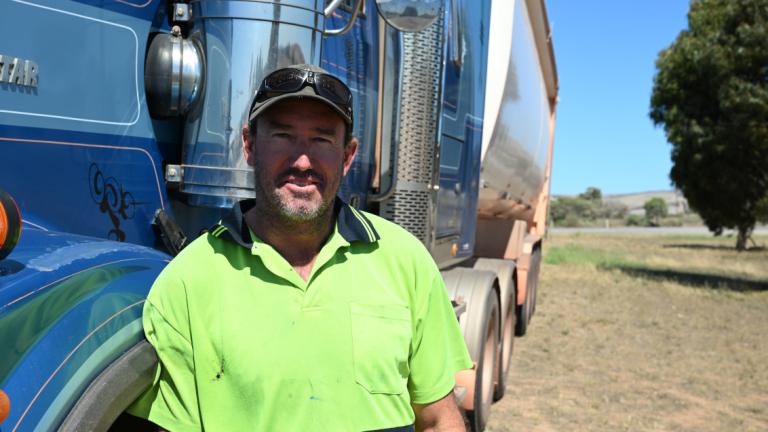
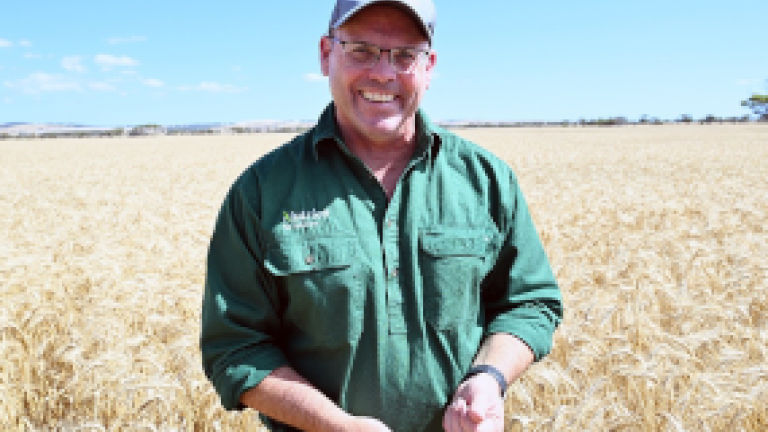
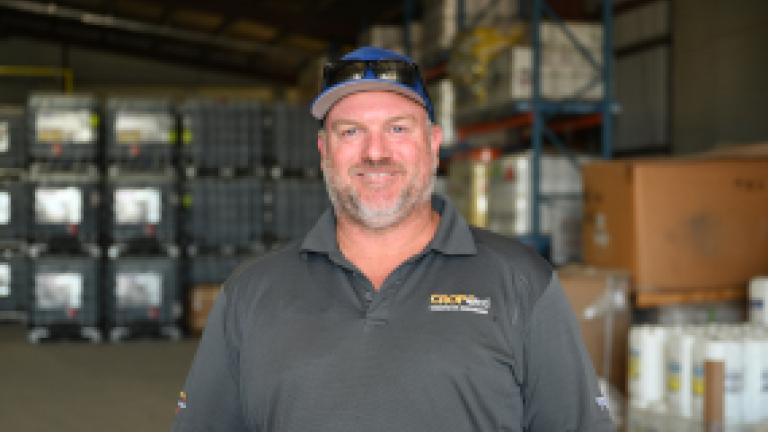
Pre-emergent herbicides targeting both grass and broadleaf weed types are vital for Mark Dolling and his broadacre enterprise near Kielpa, on the central Eyre Peninsula region of South Australia.
Mr Dolling grows wheat, barley, canola, lupins, beans and lentils in rotation. Wheat and barley are the major crops and will normally be grown back-to-back with a third-year canola or pulse crop.
“The rotation depends on soil types and weed issues,” he said. “We don’t have a set rotation, and it depends on how the paddocks are all looking at the end of harvest.”
He said soil types on the property varied from heavy flats to quite “gutless” white sand, and that change could occur in as little as 200 metres, so it was important to choose herbicides that perform consistently across different soil types.
“We try to get a decent germination and a good kill but that is getting tricky, particularly with the starts we’ve been having, with only minimal rainfall to get the crop established. We're relying a lot on pre-ems at the moment.”
Mr Dolling said in the wheat phase of the rotation, a typical herbicide option would be Sakura* and triallate for grass control in a tank mix with CALLISTO® pre-emergent herbicide to take out a wide range of broadleaf weeds.
“The reason I use CALLISTO® is for a good pre-emergent control on hard to kill broadies such as capeweed, three corner jacks [double gee] and medics (suppression),” he said.
“It mixes well with all my pre-ems, and it's sometimes just a one pass product to control all those hard to kill weeds.
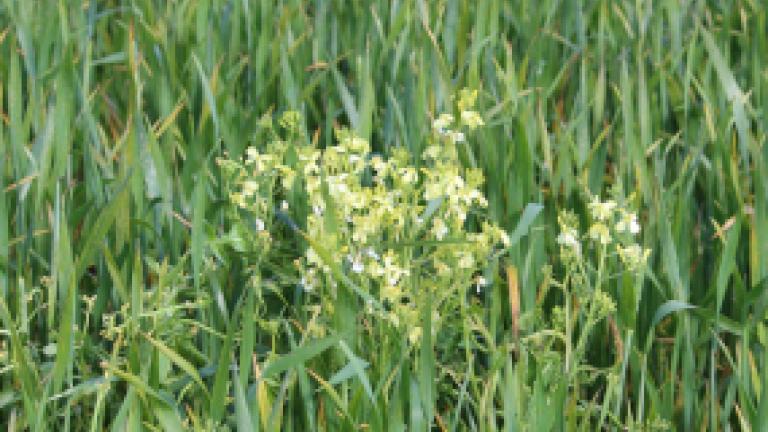
“That includes marshmallow and turnip (particularly) in the lighter country, which are the usual suspects there.
“We had a flood a few years ago (and) it washed up a heap of three corner jacks [double gee], they’re a tricky one we're starting to deal with.”
Given the aforementioned tank mix compatibility, combined with outstanding efficacy on hard-to-kill broadleaf weeds, broad spectrum of weed control, and consistent performance under dry sowing or lighter soil, Mr Dolling simply said, “CALLISTO® is a good all-rounder”.
Mr Dolling commented on its performance: “It works well with these dry starts and gives good residual (weed control). It’s good insurance. We get a good eight to twelve weeks residual and even during summer we are noticing a little bit of residual left. It still knocks a few summer weeds around, which is a bit of a bonus.”
While the residual control has been excellent, CALLISTO® has also provided the safe option of being able to rotate to pulse crops such as lupins, beans and lentils the season following application.
The area has an average annual rainfall of approximately 400mm, which he said made the 250mm / 9 month interval for re-cropping achievable.
Mr Dolling said he had taken Lontrel* herbicide out of the program because its longer residual was affecting the following pulse crops.
“I want to get away from (Lontrel*) completely, because that seems to hang around. In our lower rainfalls, it can be there one or maybe two years afterwards so I’m trying to avoid that as much as possible.”
CALLISTO® also significantly improves spray logistics. Mr. Dolling noted that because CALLISTO® delivers excellent efficacy at early stage, he doesn’t need to worry the post-emergence applications are delayed due to challenging weather or trafficability issues.
“That's one of the main benefits. You can throw it in early (dry) to get on with the other jobs, and you're not coming back with a product when it's too wet or too dry, or dodging weather. CALLISTO® buys you time in your program so you can do other spraying and not have to worry about the broadies in your crops.”
Click here to find out more about CALLISTO® or reach out to your local Syngenta representative.
ENDs
Syngenta is a global leader in agricultural innovation with a presence in more than 100 countries. Syngenta is focused on developing technologies and farming practices that empower farmers, so they can make the transformation required to feed the world’s population while preserving our planet. Its bold scientific discoveries deliver better benefits for farmers and society on a bigger scale than ever before.
Guided by its Sustainability Priorities, Syngenta is developing new technologies and solutions that support farmers to grow healthier plants in healthier soil with a higher yield. Syngenta Crop Protection is headquartered in Basel, Switzerland; Syngenta Seeds is headquartered in the United States. Follow us on LinkedIn, Facebook & X.
® Registered trademark of a Syngenta Group company.
* Registered trademark