Superior disease control options needed for Eyre Peninsula growers
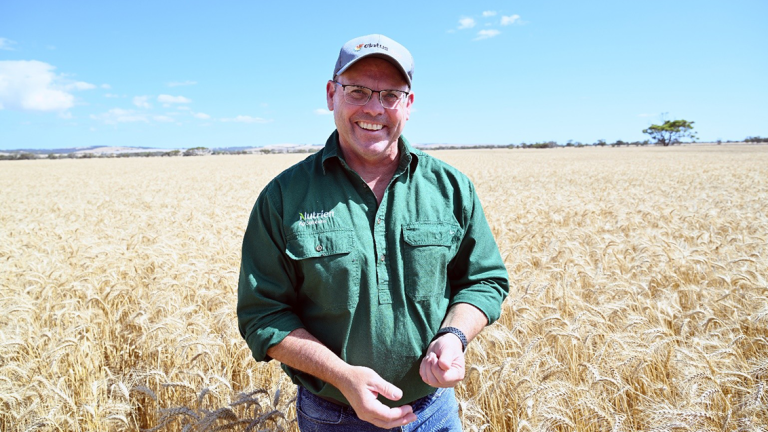
Controlling a wide range of diseases in cereal crops is a major challenge each season for farmers on the Eyre Peninsula, of South Australia.
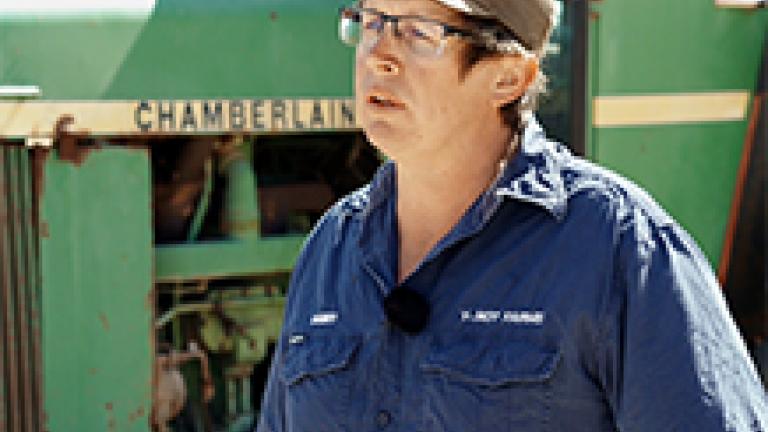
“Cummins is around 400mm annual rainfall average, and a fair whack of that falls in between June and the end of August,” Cummins Ag Nutrien Agronomist Richard May said
“There are not too many days it's not cloudy here. It certainly suits the disease once it gets up and running so you’ve got to be on the front foot.”
He said they were proactive, rather than reactive with their fungicide programs in wheat and would look at options relatively early in the season when conditions were conducive to disease development.
“We've got a more Mediterranean climate here. Wheat tends to grow higher, so growers like a short variety like Vixen*. It has been a variety that's been grown widely, but it's resistance to septoria and some of other diseases is poor.”
Mr May said a growth stage 30 fungicide timing also allowed them to cover multiple diseases including septoria, powdery mildew, eyespot and rust.
“We go with a preventative spray and then look at a growth stage (GS) 39 spray to keep the flag leaf clean.”
ELATUS® Ace contains SOLATENOL™, a powerful and unique SDHI (Group 7), combined with the DMI propiconazole (Group 3), offering the widest spectrum available for protection against key wheat and barley diseases. This co-formulation also supports resistance management, making it an excellent starting point in a preventative program. Up to two applications of ELATUS® Ace are supported in a season by resistance management guidelines, provided these are not made consecutively.
CropLife provides comprehensive guidance on resistance management, including cultural practices, the rotation of fungicide modes of action, and caps on application.
A new standard emerges
High-pressure conditions call for strong protection, something Mr May said solo Group 3 (DMI) fungicide formulations no longer offered.
“Eight to ten years ago Prosaro* was giving us good levels of control, but that level of control was starting to drop off [and] we wanted to get away from using so many applications of a DMI alone.
“We were looking for something else and ELATUS® Ace seemed to fill that void.”
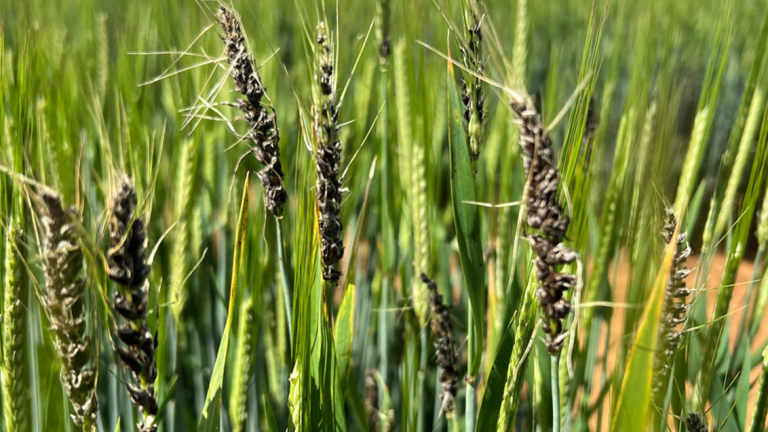
ELATUS® Ace controls a wide range of leaf blotches, rust, and powdery mildew.
Mr May said Cummins Ag Nutrien conducted comprehensive trial programs each year looking at a wide range of different products.
“We look at varieties, or we look at local issues that are emerging within the area, and products that are going to provide us with the best solution for our growers,” he said.
“ELATUS® Ace has performed really well, helping manage eyespot, and is good on septoria and reasonable on mildew. We've looked at lots of different products and ELATUS® Ace fitted into that slot quite well for us.
“Powdery mildew in wheat was becoming a significant issue for us, mainly driven by the varieties we are growing being poor for mildew resistance.
“ELATUS® Ace allowed us to bump up the level of mildew protection and gave us really good levels of septoria and rust control.”
Septoria control being a notable standout.
“A couple of years ago, when we did have high levels of septoria, we could certainly see the greenness in the crops, as far as levels of disease control from the ELATUS® Ace versus other products. There was a difference, and it was certainly superior as far as its level of septoria control.
“When we are putting it out at that earlier stage, we're also generally putting a herbicide, trace elements and other products in there. We found ELATUS® Ace really compatible with most products. Growers say it mixes well and as far as the level of disease control, they are very happy.”
Click here for more information on ELATUS® Ace, or speak to your local Syngenta representative about your cereal crop fungicide needs.
ENDs
Syngenta is a global leader in agricultural innovation with a presence in more than 100 countries. Syngenta is focused on developing technologies and farming practices that empower farmers, so they can make the transformation required to feed the world’s population while preserving our planet. Its bold scientific discoveries deliver better benefits for farmers and society on a bigger scale than ever before.
Guided by its Sustainability Priorities, Syngenta is developing new technologies and solutions that support farmers to grow healthier plants in healthier soil with a higher yield. Syngenta Crop Protection is headquartered in Basel, Switzerland; Syngenta Seeds is headquartered in the United States. Follow us on LinkedIn, Facebook & X.
* Registered trademark
™ Trademark of a Syngenta Group Company.
® Registered trademark of a Syngenta Group Company.