Blackleg shower forecast prompts canola caution
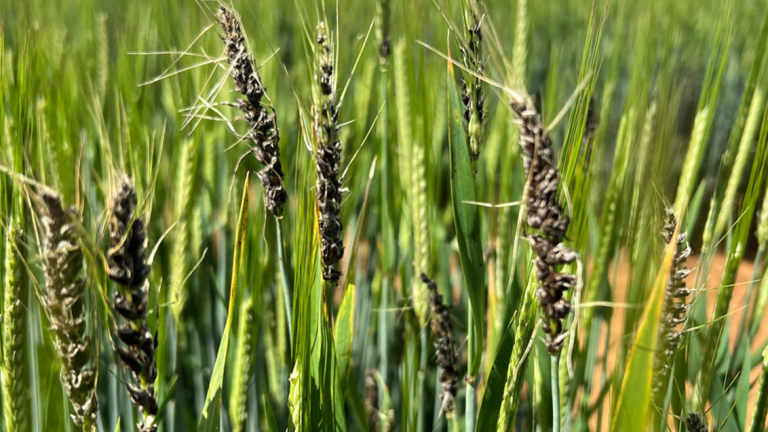
A forecast for blackleg showers in some of Australia’s highest yielding canola growing regions is prompting renewed calls for caution concerning the devastating disease.
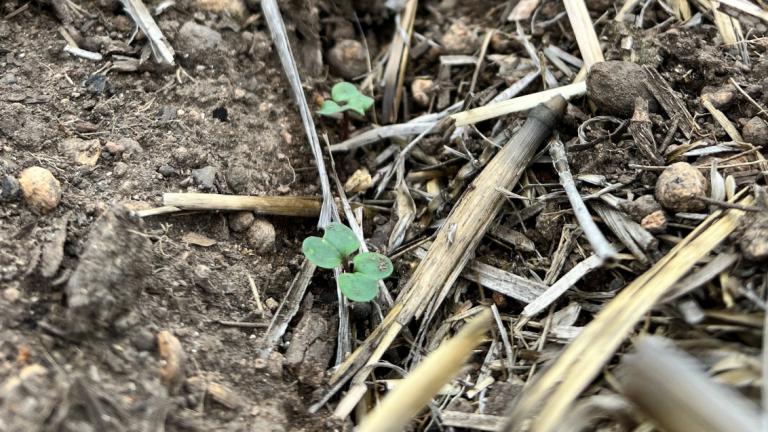
Blackleg is caused by the fungus Leptosphaeria maculans, which survives on crop residue over summer, releasing spores in humid conditions during early crop emergence, with those spores able to travel large distances to land on seedlings. Early infection can lead to stem cankers and yield losses of up to 50 per cent, while upper canopy blackleg is becoming more prevalent with the early sowing of canola crops.
Tim Trezise at Frankland River Rural said managing rotations was hugely challenging in his patch given the performance and bankable returns canola had delivered growers in recent seasons.
Combined with a trend toward earlier crop establishment, he said this was also putting more emphasis on fungicide use.
“People are starting to put their canola in mainly early April, but even late March, and so with this change we're actually seeing a little bit more blackleg, particularly upper canopy blackleg, but a little less sclerotina because flowering is happening in the colder, wetter months, but it’s still there,” Mr Trezise said.
“Blackleg is the main one we’re spraying for and some sclerotinia, we saw a bit more of that last year.”
The Western Australian Department of Agriculture has issued an alert for blackleg spore showers, tending to high risk during May, for Southern parts of the state in an area stretching from Mount Barker to Esperance. AGRIC provides an App to guide growers on the optimum time for crop establishment, helping to avoid anticipated spore showers during the vulnerable 5-6 leaf stage.
Syngenta Technical Services Lead Pete Wilson said blackleg was a serious issue across many temperate canola growing regions, in WA and beyond.
“Unfortunately, blackleg has become a serious concern for canola growers across large parts of Australia in recent years,” he said.
“Crop rotations are an important tool, and should be part of a management program. But as we know, the spores of the fruiting bodies can be carried many kilometres and it’s almost impossible to know where they will land.”
Strategies to minimise the impacts of blackleg include rotation, time of crop establishment, selection of resistant gene types, seed applied fungicides and foliar fungicide applications.
Some of the most effective fungicides for blackleg management have been SDHIs, make sure your fungicide program is helping to maximise the life of these valuable tools at croplife.org.au.
Ensure you’re subscribed to Syngenta Broadacre News for further updates, in the next issue we’ll review fungicide strategies for blackleg and sclerotinia as part of a well-rounded disease management strategy. We will also cover the winning strategy Tim Trezise has employed against blackleg and sclerotinia, using SALTRO® Duo seed treatment and MIRAVIS® Star ADEPIDYN® technology fungicide.
ENDS
Syngenta is a leading agriculture company helping to improve global food security by enabling millions of farmers to make better use of available resources. Through world class science and innovative crop solutions, our 28,000 people in over 90 countries are working to transform how crops are grown. We are committed to drive positive change in agriculture and embed sustainability across all aspects of our business.
® Registered trademark of a Syngenta Group Company.