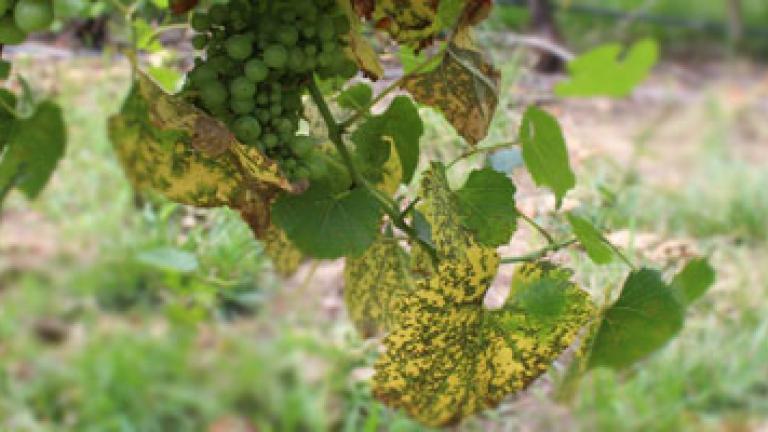
Introducing KEYBRI® Ultra fungicide: A new standard in downy mildew protection for grapes
Consistency is key when keeping downy mildew out of grape crops. This makes KEYBRI® Ultra a powerful choice in unpredictable seasons.
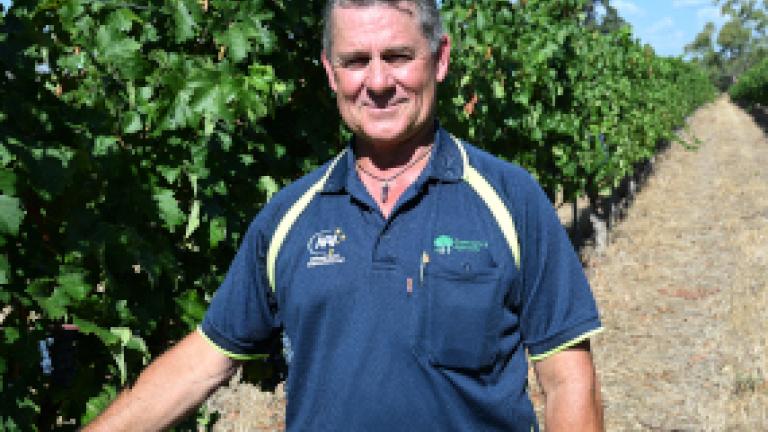
"KEYBRI® Ultra offers a new standard in protection," Syngenta Technical Services Lead Len Ibbotson said. "It combines two specialist downy mildew fungicides. Growers can count on it to target the key stages of disease development during initial infection and early-stage establishment."
"This protection is quickly established and is long lasting. This is crucial when conditions can delay fungicide applications."
KEYBRI® Ultra fungicide highlights
- Effective downy mildew control: KEYBRI® Ultra fungicide provides robust protection against downy mildew. It helps grape growers safeguard their crops from this destructive disease.
- Complete formulation: KEYBRI® Ultra fungicide incorporates two specialist downy mildew fungicides and an adjuvant package. It has built-in resistance management. No need to add additional products to the tank.
- Extended residual activity: KEYBRI® Ultra fungicide has long-lasting residual activity up to 21 days. This ensures prolonged defense. It reduces the need for frequent applications and provides peace of mind for growers.
- Rainfastness: This fungicide's exceptional rainfastness ensures it remains effective even after exposure to rainfall. It offers reliable protection under varying weather conditions.
- Enhanced formulation: KEYBRI® Ultra fungicide's advanced formulation maximises spreading and uptake. This optimises its efficacy and ensures comprehensive protection for grapevines.
Strong control and extended residual activity
KEYBRI® Ultra is a fully-loaded and optimised formulation. It streamlines spray applications. Complete with in-built adjuvant, KEYBRI® Ultra contains:
- Oxathiapiprolin: A potent oomycete fungicide that inhibits downy mildew development at extremely low concentrations
- Proven mandipropamid (Group 40)
This makes KEYBRI® Ultra a robust option. It gives growers a welcome alternative to copper mixes.
In Australia, the performance, crop safety and physical compatibility of KEYBRI® Ultra were evaluated over several seasons. Testing occurred in different locations with multiple cultivars.
During the development studies in Australia, KEYBRI® Ultra performed exceptionally well. It was comparable with existing standards, including REVUS® fungicide when treatments were applied at a 10-14 day spray interval.
However, when the spray interval was extended to 21 days, trial results suggested that KEYBRI® Ultra may offer superior performance. It provided extended residual control of downy mildew, compared to REVUS® fungicide (Figure 1).

Len said that protecting the fruit against disease is paramount. He also noted the value in protecting vegetative growth.
"Left unchecked, downy mildew infections can cause significant damage to the grapevine canopy," Len said. "There is potential for a complete loss of leaves during the growing season. Premature defoliation not only reduces ripening capacity in the current season. It can lead to a reduction of carbohydrate reserves and vine performance for the subsequent season."
In multiple studies carried out in Australia, KEYBRI® Ultra consistently reduced defoliation of vines affected with downy mildew (Figure 2).

During the 2023-2024 growing season, KEYBRI® Ultra fungicide was evaluated under commercial application conditions in Victoria's Yarra Valley. It used the maximum of two applications, strategically timed to align with possible infection windows.
KEYBRI® Ultra was compared to:
- Untreated vines (which received no early season downy mildew treatments)
- A copper treatment (Blue Shield* DF)
Fortnightly copper cover sprays were applied to both treated and untreated vines from early December through to veraison. This was in response to wet conditions that persisted throughout December.
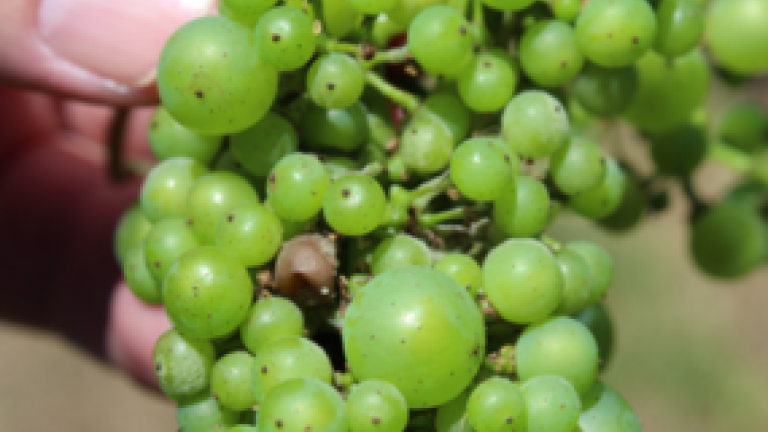
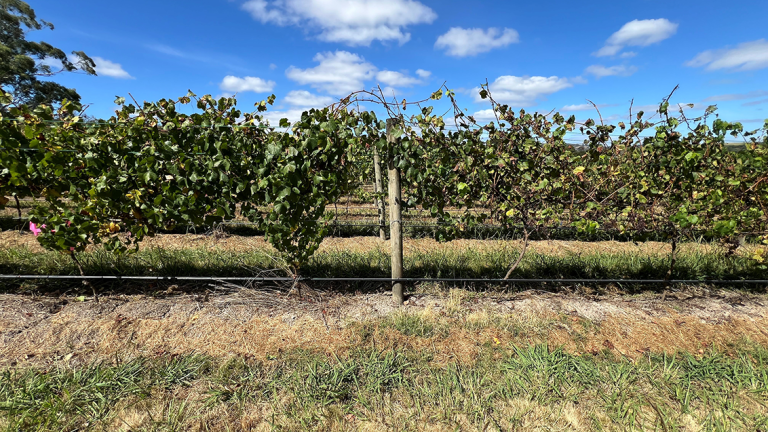
Len noted that KEYBRI® Ultra performed exceptionally well considering the very lean downy mildew program. A low and commercially acceptable level of disease was noted on vines and bunches when assessed in February (Figure 3).
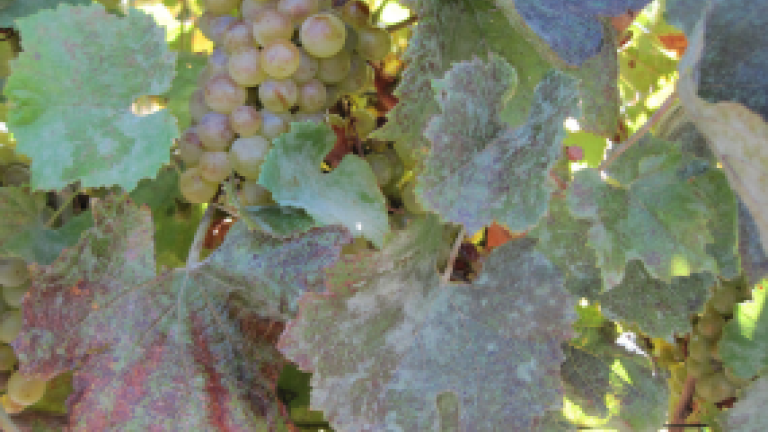
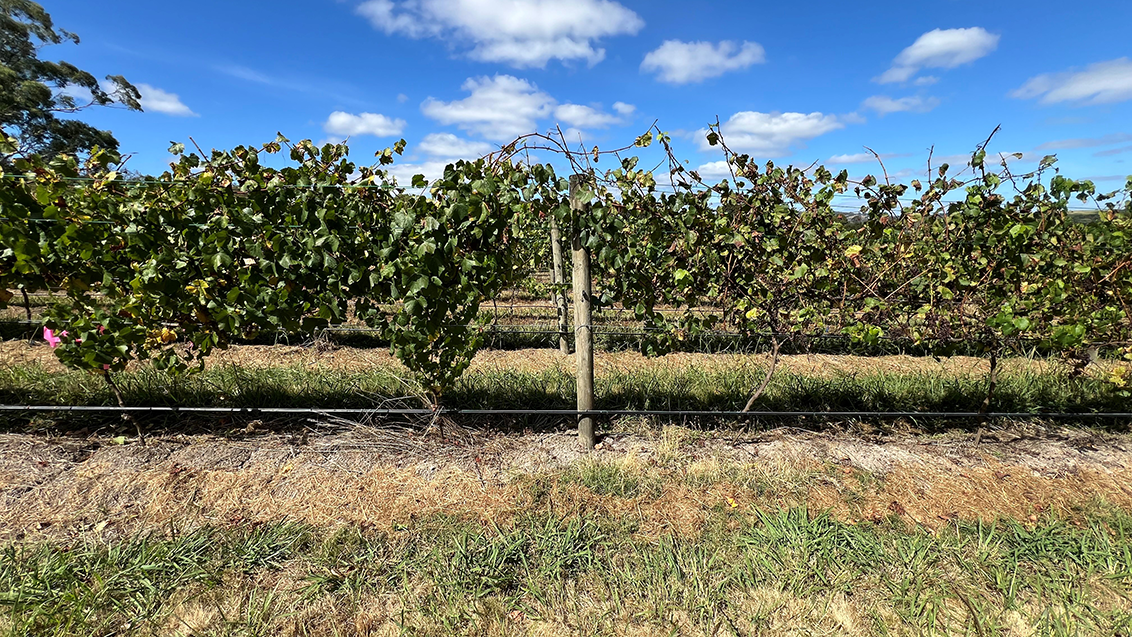
KEYBRI® Ultra vines appeared overall healthy. The full impact of downy mildew was clear on untreated vines, with significant canopy deterioration and almost no crop (Figure 4).
Throughout the development studies, KEYBRI® Ultra was also found to be safe to grapevines. It was highly compatible with a range of potential tank mix partners.

Outstanding performance under wet conditions
KEYBRI® Ultra fungicide is locally systemic with limited acropetal xylem mobility. Both active ingredients bind strongly to the waxy cuticle layer. They are then absorbed through leaves or berry caps. This offers protection to the underside of these tissues (translaminar movement).
Oxathiapiprolin is also translocated gradually outwards through the xylem.
"This combination of strong binding, translaminar movement and gradual translocation are what give KEYBRI® Ultra fungicide its excellent rainfastness and residual disease control properties," Len said.
The rainfastness properties of KEYBRI® Ultra were evaluated in several studies. There was no drop in performance even when up to 60 mm of rainfall was applied one hour after application (Figure 5).

Rainfastness is a critical quality of a good downy mildew fungicide. Disease pressure increases during wet periods. The best control is achieved when fungicides are applied before rain and subsequent infection periods.
Growers can be confident that KEYBRI® Ultra will continue to offer strong protection. It controls downy mildew even during challenging conditions where access to vineyards for post infection sprays may not be possible.
Conclusion
"KEYBRI® Ultra fungicide represents a significant milestone in the fight against downy mildew in grapes," Len said. "It offers growers a reliable and effective solution for disease management. With its powerful formulation, extended protection, and exceptional rainfastness, this fungicide is poised to make a substantial impact for downy mildew management in wine grapes. It supports healthier vineyards and higher-quality yields."
Click here for more information or contact your local Syngenta representative.
ENDs
Syngenta is a global leader in agricultural innovation with a presence in more than 100 countries. Syngenta is focused on developing technologies and farming practices that empower farmers, so they can make the transformation required to feed the world's population while preserving our planet. Its bold scientific discoveries deliver better benefits for farmers and society on a bigger scale than ever before.
Guided by its Sustainability Priorities, Syngenta is developing new technologies and solutions that support farmers to grow healthier plants in healthier soil with a higher yield. Syngenta Crop Protection is headquartered in Basel, Switzerland; Syngenta Seeds is headquartered in the United States. Follow us on LinkedIn, Facebook & X.
® Registered trademark of a Syngenta Group company
™ Trademark of a Syngenta Group company