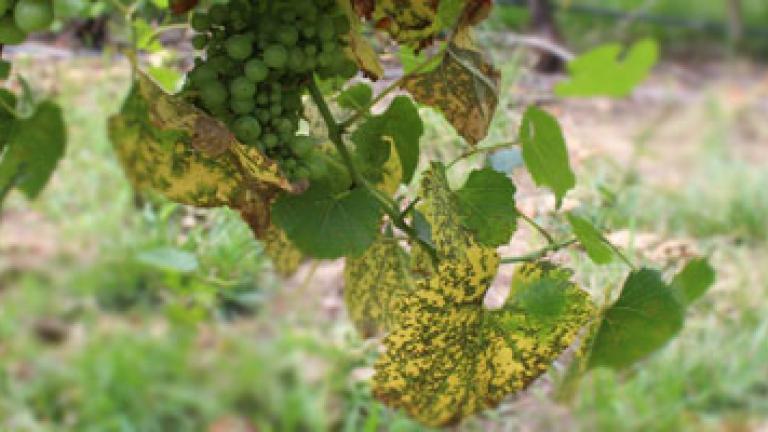
How to optimise your fungicide applications for highly effective powdery mildew management
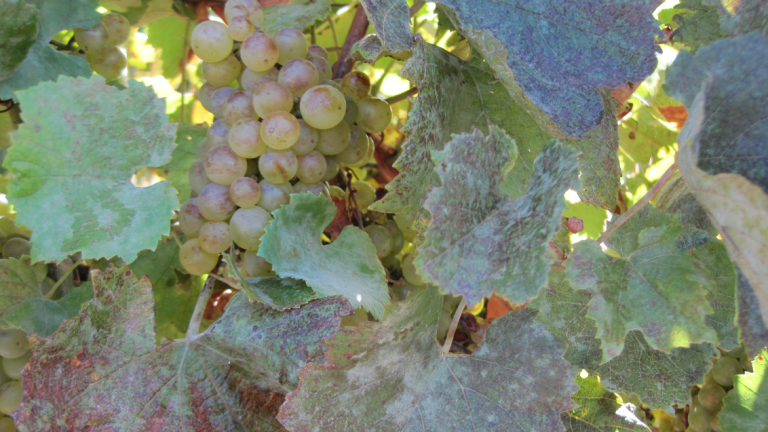
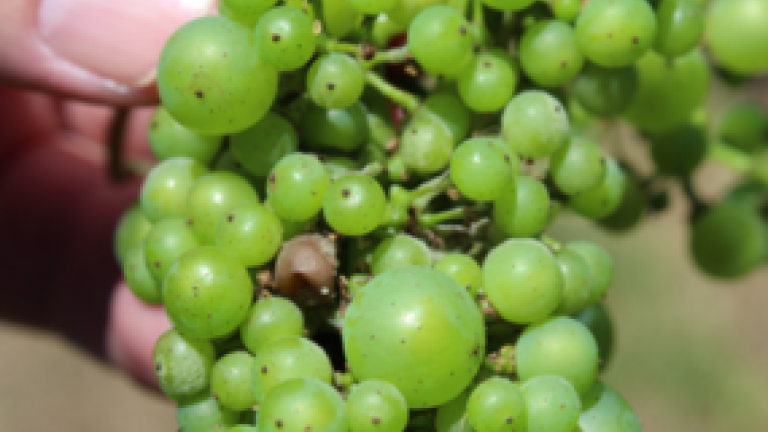
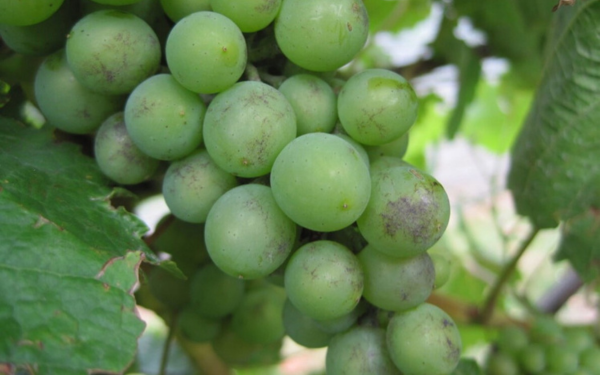
Powdery mildew infections on grapes can lead to scarring, splitting, yield loss, increased botrytis pressure and fruit rejection. With some varieties being especially susceptible - including chardonnay, semillon and verdelho – it pays to ensure that fungicide applications are timely, targeted and effective.
Powdery mildew can develop and progress independently of free moisture; in other words, rainfall is not required for this disease to spread. The conditions that favour powdery mildew progression are mild weather (20 – 30°C), low light levels and relative humidity greater than 40%.
Early applications
In most Australian vineyards, powdery mildew develops from two different sources of disease inoculum, firstly from buds that were infected with powdery mildew in the first few weeks of last season and secondly from cleistothecia that formed late in the previous season. These cleistothecia release ascospores that help to spread the diseases (this will occur when ≥ 2.5mm precipitation occurs while the temperature is >10ºC).
Spore release from an existing infection and the establishment of a new colony can occur in just 3-5 days under optimal conditions. Rainfall is not required to activate the secondary disease cycle; morning dew and slight moisture inside the grape canopy is enough to increase humidity in the canopy.
Early in the season, when temperatures are cooler, the disease cycle takes longer to complete, and the spread and development of powdery mildew typically goes unnoticed in shaded parts of the canopy.
The first 40 days after budburst is a critical period for powdery mildew control and a robust program takes this into account with a 'hit hard and hit early' approach. A robust, early season program will reduce the risk of new bud infections, thereby reducing the number of flag shoots next season. Importantly it also helps reduce the disease development throughout the season, reducing damage to your crop and formation of cleistothecia late in the season.
Good coverage is essential
Good spray coverage is essential when managing any disease. To improve coverage:
Ensure thorough coverage of all foliage and fruit.
Ensure you are applying the correct dose.
Remember, if you are applying the product as a dilute application or concentrate application, you MUST apply the same total amount of product to the target crop by applying a concentration factor.
If you are not applying as a dilute application (applying water volumes up the point of run-off), you MUST first make sure the dilute water rate is correct for the canopy size and density, and that the concentration factor is calculated accordingly to achieve correct product dosing (the Syngenta Horticulture App, available from the App Store, is a useful guide).
Angle nozzles to optimise bunch zone coverage but keep the top nozzles open and spray the full canopy.
Reduce the tractor speed, especially in the hollows and high-density zones within the block.
If the early season growth is vigorous, you may consider trimming leaves to decrease canopy density, improving spray penetration, exposing powdery mildew to damaging ultraviolet light and reducing humidity within the canopy.
While berries become increasingly resistant to new infection in the lead up to veraison, powdery mildew may continue to colonise the berry surface, while berry stems, stalks and lateral shoots remain vulnerable to new infection, increasing inoculum and disease pressure in the following season.
If you are seeing late season powdery mildew outbreaks, it is a good indication that your early-mid season protectant program is failing. Product choice aside, the two main reasons for failure are poor coverage and a long spray interval at key times.
Other tips
Following each fungicide application, monitor blocks for spread of infection. If an outbreak is identified you should review your spray coverage, dose rates and consider resistance testing. Blocks affected by powdery mildew will have a higher risk of powdery mildew next season.
If you see areas of powdery mildew later in the crop you might start to consider your plans for next season: a spray program with shorter spray intervals, an increased focus on optimising coverage and undertaking regular and thorough pest and disease monitoring.
Early season, preventative control is essential for successful powdery mildew management.
ENDs
Syngenta is a leading agriculture company helping to improve global food security by enabling millions of farmers to make better use of available resources. Through world class science and innovative crop solutions, our 28,000 people in over 90 countries are working to transform how crops are grown. We are committed to drive positive change in agriculture and embed sustainability across all aspects of our business.