Fungicide option extending potato crops in Tasmania
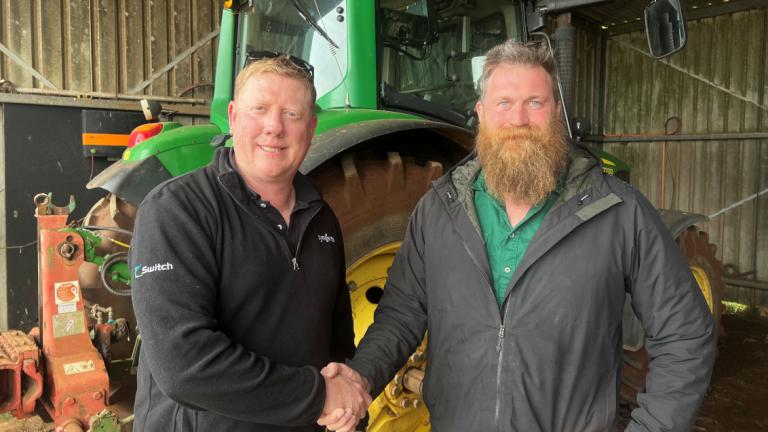
The addition of MIRAVIS® Prime fungicide is providing potato growers with a new solution, adding weeks to the crop and helping improve quality.
Scottsdale Nutrien Agronomist, Russel Whitmore, said potatoes are a major industry in the region with much of the produce sold to Simplot and McCains, ultimately as fast food French fries.
He said the varieties grown were mainly Russet potatoes which are in demand by the processors but can be challenging to grow, agronomically speaking.
“We get a lot of easterly weather with humid nights. Rain is unpredictable so we don’t know if we’re getting 10 mm or 100 mm which makes irrigation management and disease control difficult.”
Sclerotinia, a soil-borne disease, can be a major challenge with unpredictable weather conditions and affects both yield and quality of potatoes.
“You can walk into some crops and smell the Sclerotinia,” Mr Whitmore said. “It [the crop] all starts to fall over on itself but since we’ve been using MIRAVIS® Prime it has really held it out.”
MIRAVIS® Prime is a fungicide from Syngenta registered to control white mould (Sclerotinia sclerotiorum), grey mould (Botrytis cinerea) and early blight (Alternaria solani). It contains both pydiflumetofen (Group 7) and fludioxonil (Group 12) and is used over a vast area of potato production in Tasmania.
“We had a look at MIRAVIS® Prime four years ago and we’re using more every year,” Mr Whitmore said. “We probably do ninety per cent of potatoes in the northeast with MIRAVIS® Prime now.”
“MIRAVIS® Prime is that next step up. We had crops last year where we had another two to three weeks’ growth out of them. It’s keeping the crops alive.”
Potatoes in the region are planted from mid to late October and start to be harvested in April the following year.
Much of the crop is stored and utilised by the processors during the year – so the importance of quality is very high.
“They sample it on the truck at harvest time and if it’s not making the grade, it goes into a day shed and then goes down the processing line rather than into storage - which holds everything up.”
Disease is a major issue, and the fungicide program commences at shoot growth and continues throughout the crop cycle.
Early applications of different fungicides are used for pink rot and Rhizoctonia. MIRAVIS® Prime fungicide is introduced for the control of Sclerotinia just prior to full row closure.
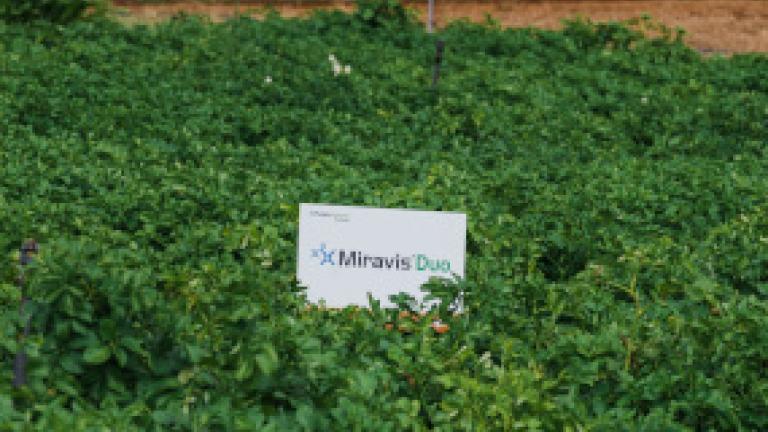
“MIRAVIS® Prime is used in the last ground rig application, at about seventy to eighty per cent row closure,” Mr Whitmore said. “You can see the health of the crop. It’s a critical time - eight or nine weeks into the season and it definitely is helping.”
He said they also utilised MIRAVIS® fungicide (Group 7) later in the season for early blight (Alternaria solani).
“We have one application of MIRAVIS® Prime, and we’ve replaced SCORE® fungicide with MIRAVIS® to use in rotation; so we are up to the three applications of a Group 7 in the program.”
Up to three, non-consecutive, Group 7 applications are allowed under the Croplife Australia Fungicide Resistance Management strategy when nine or more early blight applications are used.
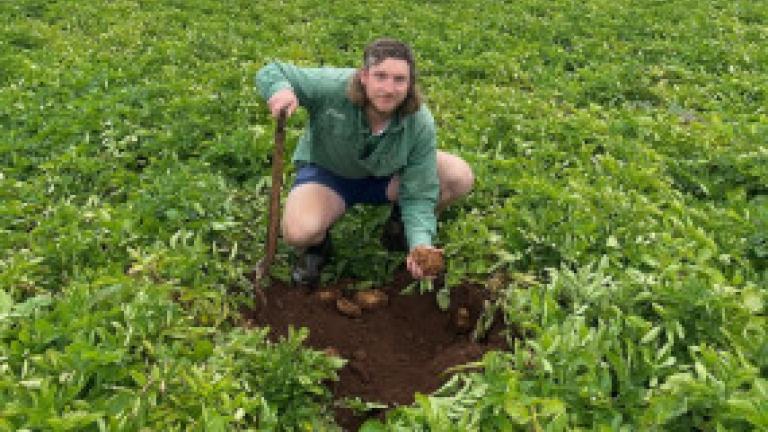
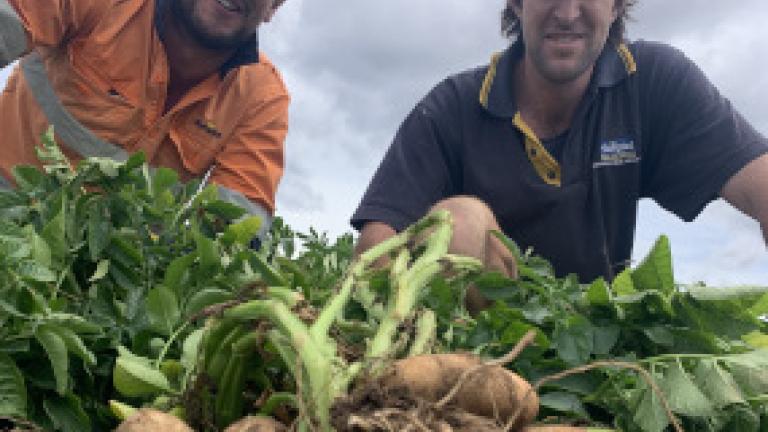
Mr Whitmore said growers in the region were aiming at yields of 70 tonnes per hectare (t/ha) from their potatoes, although anywhere above 65 t/ha was considered a decent crop.
He said the introduction of MIRAVIS® Prime fungicide had helped control diseases and allowed growers to reach greater yield and quality goals.
“It's exciting when you can see the farmers have got a lot of potential to make income. It's a really good result. Potatoes are expensive to grow and can be risky. MIRAVIS® Prime is helping.”
ENDs
Syngenta is a global leader in agricultural innovation with a presence in more than 100 countries. Syngenta is focused on developing technologies and farming practices that empower farmers, so they can make the transformation required to feed the world’s population while preserving our planet. Its bold scientific discoveries deliver better benefits for farmers and society on a bigger scale than ever before.
Guided by its Sustainability Priorities, Syngenta is developing new technologies and solutions that support farmers to grow healthier plants in healthier soil with a higher yield. Syngenta Crop Protection is headquartered in Basel, Switzerland; Syngenta Seeds is headquartered in the United States. Follow us on LinkedIn, Facebook & X.
® Registered trademark of a Syngenta Group Company.