Novel mode of action insecticide for tough vegetable crop pests
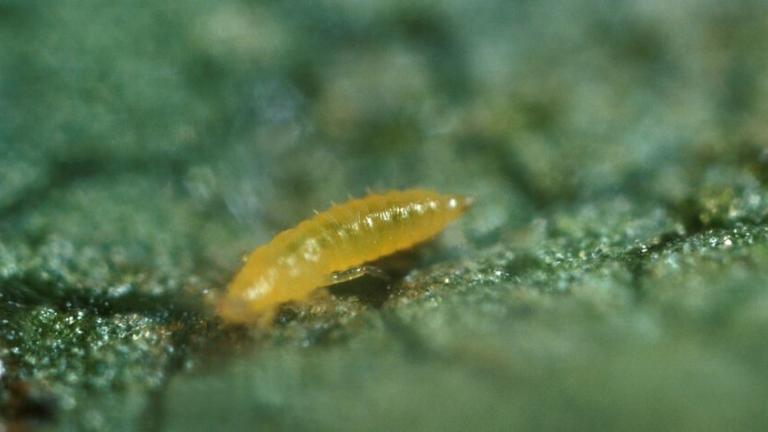
Introducing SIMODIS® insecticide
SIMODIS® insecticide (Group 30) from Syngenta with PLINAZOLIN® technology marks the next evolution in insecticide technology for protecting plant health.
"PLINAZOLIN® technology is an innovation from Syngenta and is a novel mode of action," said Syngenta Technical Services Lead, Dr Shaun Hood. "It offers reliable, robust and extended efficacy against hard-to-control pests in our key horticultural crops. We're anticipating registration of SIMODIS® insecticide before the end of this year."
Target pests
SIMODIS® insecticide will help growers tackle resistant and traditionally hard-to-control pests.
The registration includes:
- Diamondback moth
- Two-spotted mite
- Western flower thrips
Table 1: Crops and pests for which SIMODIS® insecticide will be registered
| Crop | Control | Suppression | Harvest WHP |
|---|---|---|---|
| Brassica vegetables | Diamondback moth Cabbage white butterfly | Heliothis | 3 days |
| Brassica leafy vegetables | Diamondback moth Cabbage white butterfly | Heliothis | 3 days |
| Bulb vegetables | Onion thrips Plague thrips | 7 days | |
| Cucurbits – Open field only | Two-spotted mite Cucumber moth | Broad mite Bean red spider mite Western flower thrips Tomato thrips Melon thrips Plague thrips Heliothis | 1 day |
| Fruiting vegetables – Open field only | Two-spotted mite Broad mite | Tomato Russet mite Western flower thrips Tomato thrips Melon thrips Plague thrips Heliothis | 1 day |
Field performance
"We've put SIMODIS® through its paces using commercial application equipment on a range of crops across Australia," said Dr Hood. "What impresses people is both its level of control and its residual activity."
Diamondback moth – redefining control
"Around Australia diamondback moth has become increasingly difficult to manage," said Dr Hood. "Resistance has been reducing the efficacy of some well-known chemistries."
In Gatton, Queensland in 2018, SIMODIS® insecticide (plus AGRAL® spray adjuvant) was compared to industry standards for the control of diamondback moth (DBM) in a cauliflower crop.
Trial results:
- At 7 days after application (7 DAA), all insecticides effectively controlled the DBM population (Figure 1)
- At 14 DAA, SIMODIS® insecticide recorded significantly better DBM control than Success* Neo (Group 5), Coragen* (Group 28) and PROCLAIM® Opti (Group 6)
- The residual activity of SIMODIS® insecticide was evident at this application timing when the vegetative growth had slowed
- By 20 DAA, larvae and pupae numbers increased nearly threefold in the untreated control suggesting a recent egg lay had occurred
- SIMODIS® was the only treatment that continued to control the DBM population at 20 DAA

"This is a product that is going to redefine DBM control," said Dr Hood. "It's a highly efficacious insecticide but it's also going to enable brassica growers to regain control of resistant populations."
Application tips for diamondback moth
"Monitoring is the key to effective DBM management. Apply SIMODIS® insecticide as soon as the local thresholds are reached. Target either at egg hatch or very soon after egg hatch to target young larvae."
"Growers should avoid applying SIMODIS® to established populations dominated by large, later instar DBM larvae."
Two-spotted mites – resistance management resource
In Bowen, Queensland in 2019 SIMODIS® insecticide (plus AGRAL® spray adjuvant) was applied on a cucumber crop. It was compared to industry standards for control of two-spotted mites (TSM).
In the untreated control, the TSM continued to increase throughout the trial. More than 60 motiles per 20 mm leaf disk were recorded 22 days after application (Figure 2).
SIMODIS® insecticide effectively reduced the density of eggs, nymphs and adult mites to very low levels. SIMODIS® insecticide continued to record strong residual activity out to 22 DAA.
As a contact insecticide, residual activity of SIMODIS® insecticide will be influenced by crop growth stage and spray coverage.

Application tips for two-spotted mites
"SIMODIS® insecticide is an exceptional miticide," said Dr Hood. "With mites, monitoring is key to effective management. For best results apply SIMODIS® insecticide as soon as local thresholds are reached. Target the mite population before it becomes established."
"Up to two applications of SIMODIS® insecticide per crop will be permitted. But to manage resistance, growers will need to rotate to a miticide from a different mode of action group before applying a second SIMODIS® insecticide application."
Consistent performance
"These trials are a snapshot of what we've observed at numerous trial sites across Australia," said Dr Hood. "SIMODIS® insecticide has consistently delivered reliable and robust efficacy and exceptional crop safety against a range of pests and in a range of crops."
SIMODIS® insecticide has excellent sunlight stability and rain-resistant properties. This allows for long spray intervals.
Syngenta will be showcasing SIMODIS® insecticide in the field at the Syngenta GrowMore event, Gatton, November 2022.
ENDs
Syngenta is a leading agriculture company helping to improve global food security by enabling millions of farmers to make better use of available resources. Through world class science and innovative crop solutions, our 28,000 people in over 90 countries are working to transform how crops are grown. We are committed to drive positive change in agriculture and embed sustainability across all aspects of our business.
® Registered trademark of a Syngenta Group company
™ Trademark of a Syngenta Group company