An easy and sustainable solution for nematodes
What is VANIVA®?
VANIVA® powered by TYMIRIUM® technology is the latest nematicide from Syngenta. It protects cucurbit and fruiting vegetable crops from root-knot nematodes in open field and protected cropping.
Key benefits:
- Exceptional potency against root-knot nematodes
- Easy to use
- Low impact on soil health and the environment
- Excellent worker safety profile
How to use VANIVA®
Only one application is required. Apply VANIVA® to the soil via trickle/drip irrigation at planting to protect developing roots.
The application rate is low at just 550 ml/ha. VANIVA® provides long lasting activity around the root zone. This helps plants establish a strong, vigorous root system.
Using VANIVA® protects the plant against early infestations of root-knot nematodes. This promotes the greatest yield potential of the crop.
Proven performance in Australia
In Australia, VANIVA® has demonstrated exceptional control against root-knot nematodes.
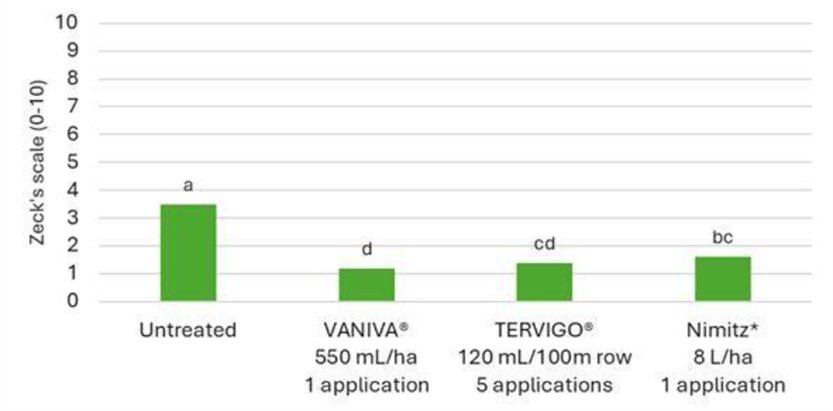
In a trial at Meadowvale, Qld (2019), VANIVA® was applied immediately after transplanting rockmelons (cv. Jamaica). It was compared with:
- Five applications of TERVIGO® (applied at transplanting then at fortnightly intervals)
- A single application of Nimitz* (applied 7 days prior to transplanting)
The trial was in a commercial field with a previous history of nematodes and remnants of the previous strawberry crop (note that VANIVA® is not registered for use in strawberries) which had been sprayed out but not cultivated. A DNA-based test confirmed nematodes were present in the soil at damaging levels.
Root infection was deemed commercially damaging in the untreated samples. VANIVA® significantly reduced the incidence of root galling compared to the untreated (Figure 1). All nematicide treatments effectively reduced root-knot nematode to low commercially damage levels (Zeck's rating <2).
Why nematode control matters
Nematodes often remain undetected. Plants rarely die from nematode infestation. However, galls produced by root-knot nematodes interfere with proper root function. This limits the plants' ability to access water and nutrients.
Nematode infestation can occur within days of transplanting. It is essential to protect new plants soon after planting.
If nematode infestation has occurred, plants can show symptoms later in the growing season:
- Water stressed plants
- Stunted and/or yellowing plants
- Reduced crop load
- Smaller fruit
By then, it is too late to save the crop from nematode damage.
Root-knot nematode damage to root systems can also increase the severity of diseases like Fusarium and Phytophthora. This becomes more apparent during periods of water stress.
Soil health benefits
VANIVA® nematicide enables more vigorous root development. It enhances symbioses between the soil and plant roots for healthier crops.
In comparison with most other nematode management options, VANIVA® nematicide has been demonstrated in Australian trials to preserve diverse species of soil organisms. It has limited effect on:
- Soil invertebrate populations
- Soil bacteria
- Fungal diversity and mycorrhizal fungi agroecosystems
"Our soil microbiome and biota study with AgPD and Metagen in Bundaberg last year was really exciting," said Syngenta Technical Services Lead, Dr Shaun Hood. "We knew from our development trials how effective VANIVA® is as a nematicide. But to have this evidence, that reflects a wealth of global data on soil health, that VANIVA® has negligible impact on soil microorganisms was brilliant."
"In addition to an exceptional soil health profile, what sets VANIVA® apart from every other nematicide is how easy it is to use," he added. "One simple application at transplanting protects the plants during that critical establishment phase. It sets the crop up for the best possible yield."
Registration and use
VANIVA® is registered in fruiting vegetables and cucurbits (field and protected cropping) with a single use rate of 550 mL/ha. This is significantly less volume than every other available nematicide. This makes farm operations easier.
To achieve optimal results, plants should be sown/transplanted within 12 cm of the drip/trickle irrigation. This ensures VANIVA® distributes directly around the root system.
Like all crop protection products, knowing the paddock history and monitoring is key. This ensures you're using the right product at the right time.
Protected cropping
Protected cropping growers will also be able to use VANIVA®. Syngenta Southern Horticulture Manager, Nick Hall, feels this will be a huge win.
"Everything is intensified in protected cropping. With short cropping cycles there is little time for corrections. Ensuring your soil is healthy and using tools that support ongoing soil health is critical."
More information
For more information on VANIVA® nematicide click here or speak with your local Syngenta representative.
ENDs
Syngenta is a global leader in agricultural innovation with a presence in more than 100 countries. Syngenta is focused on developing technologies and farming practices that empower farmers, so they can make the transformation required to feed the world's population while preserving our planet. Its bold scientific discoveries deliver better benefits for farmers and society on a bigger scale than ever before.
Guided by its Sustainability Priorities, Syngenta is developing new technologies and solutions that support farmers to grow healthier plants in healthier soil with a higher yield. Syngenta Crop Protection is headquartered in Basel, Switzerland; Syngenta Seeds is headquartered in the United States. Follow us on LinkedIn, Facebook & X.
® Registered trademark of a Syngenta Group company
™ Trademark of a Syngenta Group company