Clean crops require the right tools used the right way
Vegetable growers tackle many challenges in their crops and insect pests are always one of the major ones. Insect pests can reduce yield and quality of produce and growers know the importance of integrating a range of management strategies as well as rotating insecticide modes of action to manage resistance. Syngenta strives to develop innovative solutions to support growers which includes developing new modes of action and providing industry-leading technical support of products.
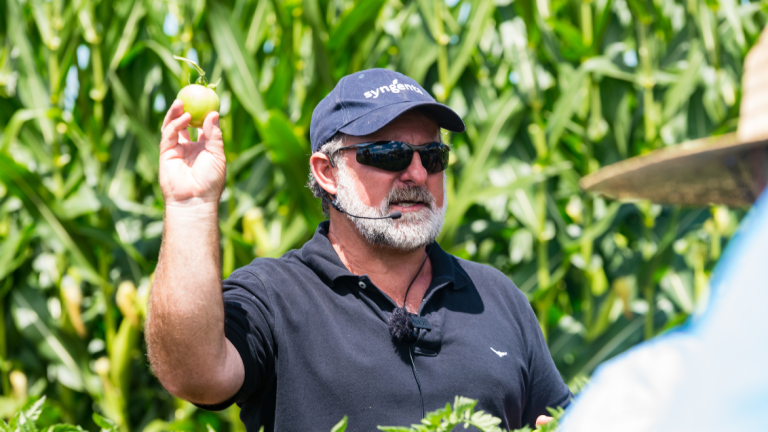
Syngenta Technical Services Lead, Dr Shaun Hood said growers are really spoilt for choice with Syngenta’s range of insecticides that includes SIMODIS®, MINECTO® Forte and PROCLAIM® Opti.
“SIMODIS® insecticide is a novel mode of action Group 30 that offers reliable, robust and extended efficacy against difficult to manage pests in our key horticultural crops,” said Dr Hood.
“SIMODIS® is registered for three key insect groups – Lepidoptera, thrips and mites, in vegetables including cucurbits, fruiting vegetables, bulb vegetables and brassicas.”
“It has excellent residual activity, is highly compatible with other products and is an exceptional miticide. SIMODIS® is also a great rotation option for managing resistant diamondback moth (DBM) populations.”
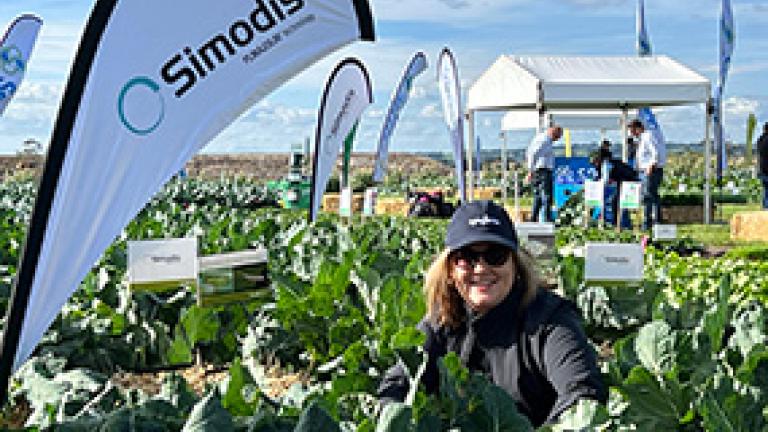
Stuart Grigg is an independent agronomist based at Ballan, Victoria with clients growing various vegetables including brassicas, and alliums. Mr Grigg was involved in early commercial trials with SIMODIS® insecticide at Werribee South and recalls seeing great results with DBM in brassicas.
“We compared SIMODIS® to a standard insecticide program and an untreated control. The DBM control in the SIMODIS® treatment were comparable with standard practice,” said Mr Grigg.
“I thought I can easily find a fit for SIMODIS® in brassica programs as it’s a great alternative to Group 3 and Group 28 products. It’s good to have another mode of action.”
Mr Grigg said using products like Bt (Group 11) and the diamides (Group 28) early in the crop when the DBM pressure is high means growers can utilise SIMODIS® for later in the crop.
“In brassicas SIMODIS® is a good option from button stage onwards. This timing minimises the impact on beneficials and with a control window of up to three weeks, it keeps the crop clean through to harvest,” said Mr Grigg.
“SIMODIS® is another tool on the belt and it’s a really good tool. It’s a robust product - the high UV stability means you can apply it in a range of conditions.”
“It’s good to know you have SIMODIS® up your sleeve for later in the season.”

Independent consultant, Stuart Grigg, Victoria: “SIMODIS® is another tool on the belt and it’s a really good tool. It’s a robust product”
Dr Hood said MINECTO® Forte is another solution for cucurbits and fruiting vegetables and is also a good rotation option for chewing and sucking pests in these crops. It moves into the leaves via translaminar movement and protects both upper and lower leaf surfaces. This stops pests from feeding almost immediately to maximise yield and quality.
“MINECTO® Forte tackles whiteflies and aphids, as well as mites, thrips and Lepidoptera, so it actually compliments SIMODIS® really well,” said Dr Hood.
“The optimised co-formulation of MINECTO® Forte is an advantage as it widens the pest spectrum, keeping it simple for growers so they don’t need complicated tank mixes.”
“MINECTO® Forte is registered for multiple pest species that can overlap or occur at the same time. Growers can be confident that they’ve taken care of all their key pests with just the one product.”
In regions where fall armyworm is a threat, PROCLAIM® Opti insecticide is now registered for fall armyworm in all states and territories in sweet corn.
“PROCLAIM® Opti is a Group 6 insecticide that is selective for Lepidopteran pests and is highly compatible with IPM programs. The translaminar movement means the active ingredient is locked inside the plant, offering effective residual control for up to 14 days,” said Dr Hood.
“PROCLAIM® Opti is also registered for DBM in certain vegetable crops so is a great resistance breaker for controlling larvae that are no longer susceptible to other chemistry.”
Dr Hood said responsible stewardship of products underlies everything they do at Syngenta. Technical support and training for products is a priority so that resellers, agronomists and growers understand how to be good stewards of existing and novel modes of action.
“Stewardship is more than just rotating modes of action for resistance management. It’s also adhering to the label directions, as well as managing spray drift and preventing off target effects, through appropriate nozzle selection and maintenance and calibration of spray equipment,” said Dr Hood.
“What’s the most expensive insecticide application you’ll do? The one that doesn’t work.”
“Using the right product at the right stage of the pest and the crop and following label recommendations gives growers the best possible chance of early, effective and sustainable management of insect pests.”
® Registered trademark of a Syngenta Group Company.
* Registered trademark
ENDS
Syngenta is a leading agriculture company helping to improve global food security by enabling millions of farmers to make better use of available resources. Through world class science and innovative crop solutions, our 28,000 people in over 90 countries are working to transform how crops are grown. We are committed to drive positive change in agriculture and embed sustainability across all aspects of our business.