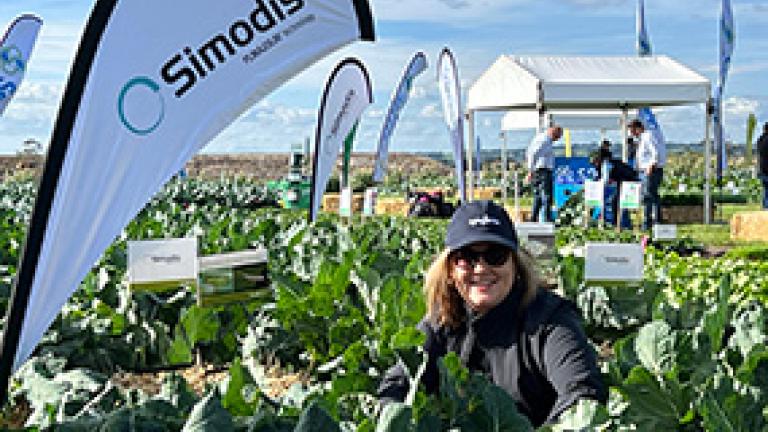
My new “go-to” brassica insecticide
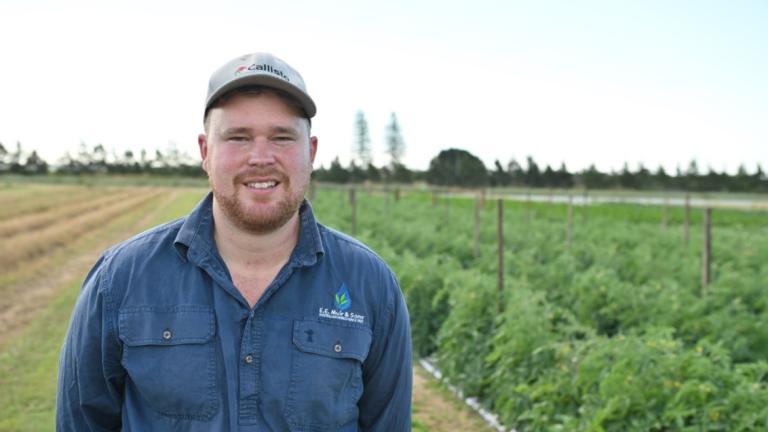
Persistent diamond back moth (DBM) pressure has troubled brassica growers in Manjimup, Western Australia, year after year, with SIMODIS® insecticide now delivering vital management options.
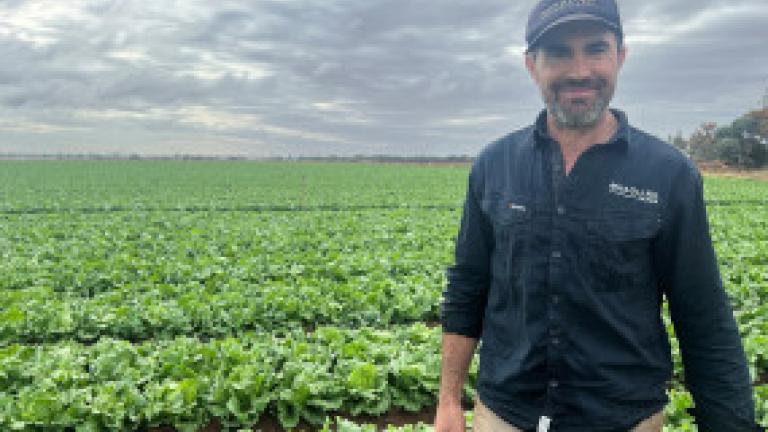
Local Muirs agronomist, Ryan Bradshaw, said the region was well suited to growing broccoli, cabbages and cauliflower, with crops going in from late July, and continuing through until January and February.
He said DBM is a major pest and was a constant threat throughout the summer.
“Once we start cutting hay the DBM pressure goes right up. We get halfway through the first planting and then you’re on,” he said.
A wide range of products were used to try to control the pest last season during this relentless pressure from DBM. “We used our existing chemistry up very quickly and started to get less and less of a result,” Mr Bradshaw said. “We were hitting DBM with knockdowns and it just wasn’t doing it.
“I saw SIMODIS®, from Syngenta, had a registration come through on brassicas so I thought I might have a look at it and see how it goes.”
“We applied SIMODIS® and the results were instant. I came back three days later and couldn’t find any DBM moving. It was a good result.”
A major benefit of SIMODOS® is its classification as a Group 30 insecticide, which can be used as an alternative to the suite of other chemical groups currently being used in vegetables.
“A lot of the other products are aging and there seems to be a lot of resistance everywhere,” Mr Bradshaw said. “I think there is increasing resistance in areas where we didn’t previously have resistance.”
“Trying to find and use the right products at the right stage, is really tricky. That’s why SIMODIS® was really good. We can place it at any point and have really good results.”
“Last year it was my go-to.”
He said other chemistries, such as the Group 28s, were a vital part of growing vegetables and should be protected.
“If we can delay resistance in these [Group 28s] by introducing products such as SIMODIS® into the rotation it is going to work in everybody’s favour.
“A new group is always well received by both myself as an agronomist and my growers. It is very important - new groups really make the difference.”
Going forward, SIMODIS® insecticide will play a critical role in controlling DBM and rotating chemistry to extend the life of other groups.
SIMODIS® insecticide can be applied twice during the crop.
“I will use SIMODIS® as a break for the other chemistries and I see a fit for it in the middle and towards the end of the program,” Mr Bradshaw said. “It really cleans up and we don’t see any problems at harvest. You’re not finding DBM alive in broccoli, cabbages, or cauliflower - it's just not there.”
The absence of pests in the produce at harvest also provides advantages by reducing the labour needed to prepare the vegetables for market.
“As an example with cabbages,” Mr Bradshaw said, “if we can keep it clean coming in towards the end, we don’t need to spend time peeling leaves off the outside of the heads because the residual control of SIMODIS® has kept on top of it the whole way through.”
Click here for more information on SIMODIS® insecticide, or speak with your local Syngenta representative.
ENDs
Syngenta is a leading agriculture company helping to improve global food security by enabling millions of farmers to make better use of available resources. Through world class science and innovative crop solutions, our 28,000 people in over 90 countries are working to transform how crops are grown. We are committed to drive positive change in agriculture and embed sustainability across all aspects of our business.
® Registered trademark of a Syngenta Group company.