Three key considerations for tank mix success

When products are developed, manufacturers may test compatibility of some common mixing partners, but it’s impossible to test them all. You will see more and more that mixing partners are unlikely to be listed on product labels. One reason is the frequent change in formulations, but most importantly these tests do not represent the situation where it will be used - varieties, growth stage, environmental conditions and application.
There are three types of product compatibility; (1) physical, (2) crop safety and (3) biological efficacy.
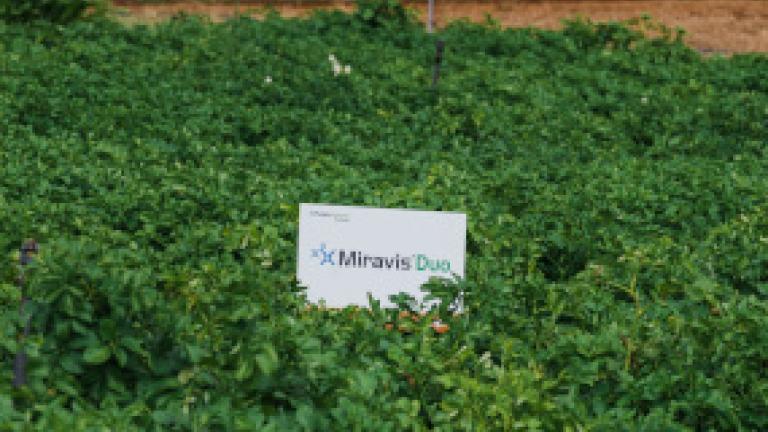
Physical compatibility is the ability of the products to combine well in a tank and remain stable in solution. Incompatible products may form a sludge, cause excessive foam, sedimentation, result in nozzle blockage and causing you lots of downtime cleaning out your sprayer. MIRAVIS® fungicide is highly compatible with a wide range of other products.
Crop safety compatibility refers to products that do not cause phytotoxicity to the target crop and do not impede crop growth. If a tank mix is unsafe to the crop, symptoms such as speckling, yellowing, burning, curling or stunting may appear. Variety or crop age can influence sensitivity to the tank mix. BRAVO® WEATHERSTIK® fungicide is not recommended to tank mix with adjuvants as crop damage may occur.
Biological efficacy is the interaction between products in a tank mix whereby the efficacy of the individual product is not affected. Pest or disease control may be reduced if the products are biologically incompatible. For example, certain copper-based fungicides can reduce the efficacy of some Group 3 (DMI) fungicides when tank mixed.
Tank mixing minimises the number of passes whilst targeting different pests or diseases and/or addressing nutritional needs. But the key is to keep it simple and mix only two, or a maximum three products, in a tank. The greater the number of products in the tank, the greater the risk of incompatibility.
Before using any tank mixture, consult and comply with any label recommendations of the mixing partner product. If there are no label recommendations, then seek advice from the manufacturer of the products you are using. Correct mixing order with agitation should be followed to ensure products are adequately combined.
Do you grow onions, brassicas or fruiting veg? See our technote on tank mixing SIMODIS® insecticide with other products.
If you are unsure of the compatibility of the desired products for the mix, conduct a jar test to assess physical compatibility. This is a relatively quick test and can show if problems may arise in the tank. It is not an indicator however of crop safety or biological efficacy. If you are happy with the jar test, make a small volume to spray over the crop and assess within 3 – 7 days for any possible effects.
Although this is a quick reminder of tank mixing principles, it’s important to consider what products you plan to tank mix in advance. Never ask the question just as you are doing it. Do not take the risk to you, your machinery and your crop if you get it wrong.
Contact your local Syngenta representative for more information.
By Dr Brandy Rawnsley
Syngenta Technical Sevices Lead - Horticulture
Further reading:
Technote: How to conduct a simple physical compatibility jar test
ENDS
About Syngenta Australia
Syngenta is a leading agriculture company helping to improve global food security by enabling millions of farmers to make better use of available resources. Through world class science and innovative crop solutions, our 28,000 people in over 90 countries are working to transform how crops are grown. We are committed to drive positive change in agriculture and embed sustainability across all aspects of our business.