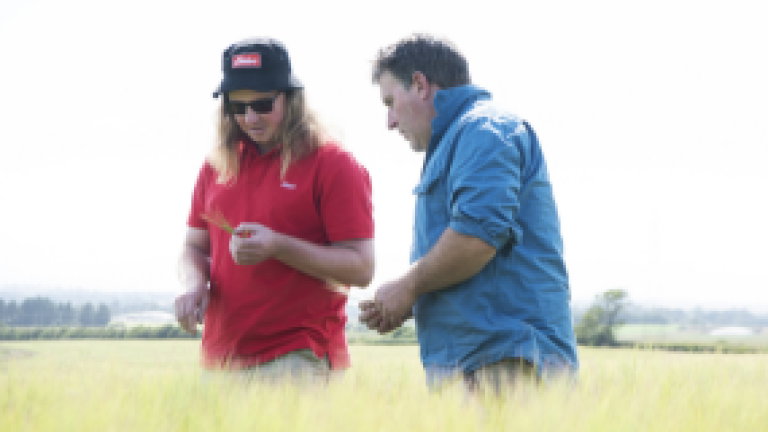
Setting up the potato season for success
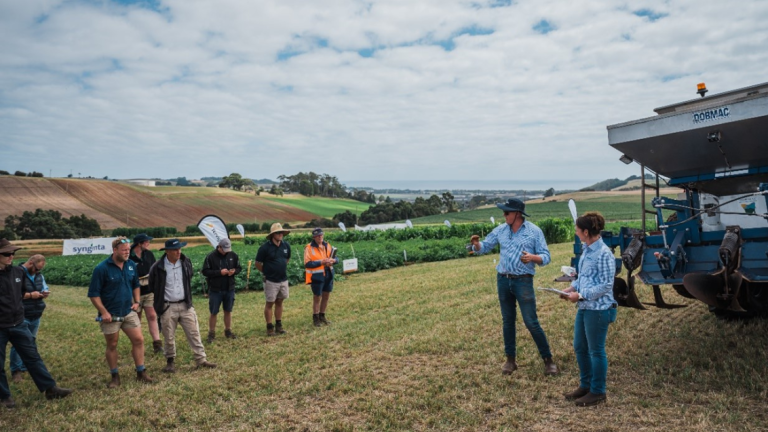
There are many factors that can determine the success of a season, which should be considered before a single potato is planted. Crop protection measures will be an important part of most paddock plans, with discussions between growers and their advisors crucial in getting it right.
Syngenta Territory Sales Manager in Tasmania, Wayne Richardson, said understanding the weed spectrum, paddock history, soil nutrition, seed quality and soilborne disease levels is a critical part of that discussion. "This planning helps growers to target weeds with the right product at the right stage and combine seed and in-furrow treatments to optimise disease control, setting the season up for the best possible chance of producing high quality premium potatoes" he said.
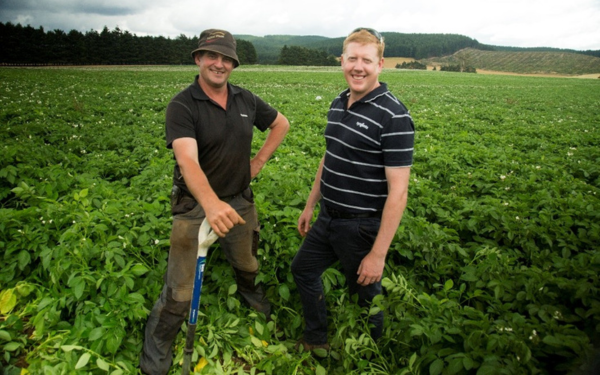
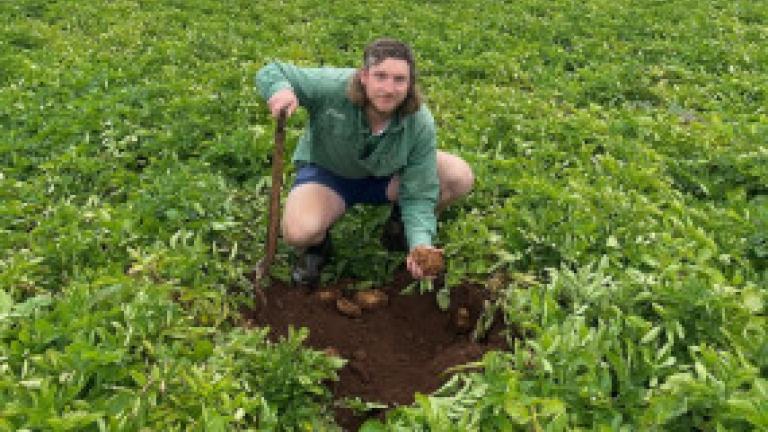
mid-season, checking how the crop is progressing.
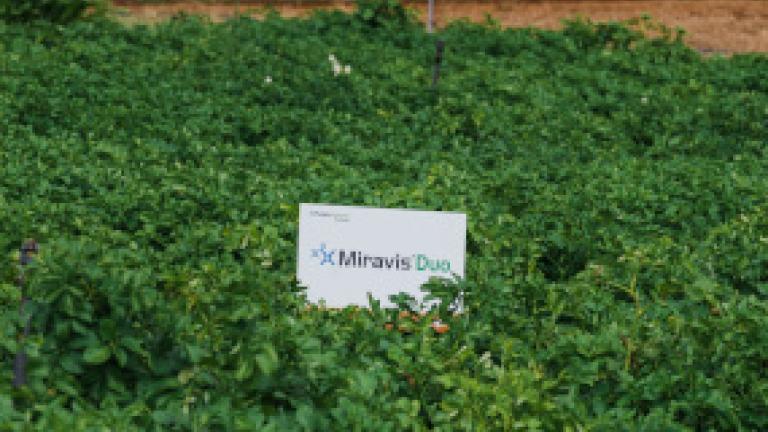
Syngenta’s potato portfolio includes a comprehensive range of herbicides, fungicides and insecticides to assist growers achieve their crops full yield and quality potential.
Herbicides are a critical component for weed control prior to planting. Every 10% in weed biomass incurs a 12% decrease in yield1, so it is important to target any potential weeds early. Potato crops can be very sensitive to herbicides, so pre-emergent herbicides applied after planting but before shoots emerge are critical to target weeds before they emerge. Pre-emergent herbicides with soil activity must be applied before full potato emergence to avoid crop injury.
If weeds are present, post-emergents can offer a quick knockdown, and knowing the weeds is just as important to decide if a selective herbicide is needed (e.g. for grass weeds) or a non-selective (often called knock downs). Many foliar herbicides are non-residual, having little or no soil activity and are quickly deactivated in the soil.
Syngenta’s non-selective herbicides for use as knockdowns pre-planting include SPRAY.SEED® 250 (Group 22) and GRAMOXONE® 360 PRO (Group 22). GESAGARD® herbicide (Group 5) can also be used from pre-plant to planting and controls a range of early competing annual grasses and broadleaf weeds.
“SPRAY.SEED® 250 (Group 22) is a great option for pre-planting for fast and effective knockdown of annual grasses and broadleaf weeds. It is rainfast within 30 minutes which makes it highly flexible,” said Mr. Richardson.
“GESAGARD® offers both contact and root activity and should be applied in late autumn/winter to actively growing weeds, but before the potato crop has emerged. It offers residual control for 6 to 8 weeks to aid in good crop establishment.”
Once the crop is planted, Syngenta’s BOXER GOLD® herbicide (Group 15) offers excellent early control of common weeds found in many potato growing regions.
“BOXER GOLD® is a selective pre-emergent herbicide that is effective against annual ryegrass, including Group 3 resistant populations, as well as a range of tough to manage broadleaf weeds like fat hen, fumitory, capeweed and certain nightshades,” said Mr. Richardson.
“Apply BOXER GOLD® once per crop, anytime from post-planting but no later than 25% crop emergence. Best results are achieved when applied as soon as possible after planting and when irrigation or rainfall incorporates BOXER GOLD® to a depth of 3 to 5 cm within 7 days of application.”
“BOXER GOLD® can be tank mixed with SPRAY.SEED® 250 if a knockdown is needed post-planting.”
FUSILADE FORTE® herbicide (Group 1) is a reliable inclusion in any potato spray program. “FUSILADE FORTE® is a post-emergent herbicide specific to a wide range of annual grasses in crop. Apply to actively growing grass weeds up until potatoes are 15 cm or less in height” advised Mr. Richardson.
As with weeds, knowing what you are dealing with is crucial to effective management of potato diseases. Growers can look at the cropping history of the paddock and get both seed and soil tested so they understand the disease risk associated with different pathogens.
“PREDICTA* Pt is DNA-based testing that gives growers a comprehensive understanding of their risk levels for all the major soil-borne potato diseases as well as nematodes, so they can make decisions about how to manage those risks,” said Mr Richardson.
Syngenta’s market leading combination of seed treatment and in-furrow fungicides delivers comprehensive early control of seed and soilborne fungal diseases in potato crops.
“The seed treatment VIBRANCE® Premium fungicide, is a robust option if seedborne risk is high. It combines two active ingredients from two modes of action – Group 7 and Group 12 and is the broadest disease spectrum potato seed treatment on the market,” said Mr. Richardson.
The liquid formulation of VIBRANCE® Premium fungicide adheres to tubers, providing uniform coverage and early control of black dot, black scurf, Fusarium dry rot (seedborne), gangrene (seedborne) and silver scurf. It also suppresses common scab.
“VIBRANCE® Premium fungicide can be applied either as seed is downloaded into storage after harvest to provide excellent storage disease control, or just prior to planting as a traditional seed treatment following label recommendations to ensure even coverage of tubers,” said Mr. Richardson.
In-furrow fungicides AMISTAR® 250 SC fungicide (Group 11) and RIDOMIL® Gold 480 SL fungicide (Group 4) offer a complete zone of protection to provide insurance against potential soil-borne diseases.
“Use AMISTAR® 250 SC fungicide in-furrow at planting for control of black scurf and suppression of silver scurf. Spray nozzles need to be mounted so the spray is directed into the furrow as a 15 to 20 cm band just before the seed is covered. Use higher rates where testing shows high disease risk,” said Mr. Richardson.
“RIDOMIL® Gold 480 SL fungicide is a reliable liquid formulation registered for in-furrow use to control pink rot which can be devastating to most crops in Tasmania. It can be combined with AMISTAR® 250 SC fungicide for one pass control of pink rot, black scurf with activity on silver scurf as well.“
Seed and in-furrow treatments should not be applied if conditions or seed quality favour bacterial rots as these diseases may be aggravated if seed comes into contact with additional moisture. Make sure you read label directions for any new updates.
For more information please contact your local Syngenta representative or visit Syngenta.com.au/potatoes
® Registered trademark of a Syngenta Group Company
* Registered trademark
1 Nelson, D. and Thoreson, M. (1981) Competition between Potatoes and Weeds. Weed Science, 9, 672-677.
ENDS
Syngenta is a leading agriculture company helping to improve global food security by enabling millions of farmers to make better use of available resources. Through world class science and innovative crop solutions, our 28,000 people in over 90 countries are working to transform how crops are grown. We are committed to drive positive change in agriculture and embed sustainability across all aspects of our business.