Herbicide control options form part of a holistic orchard weed management strategy
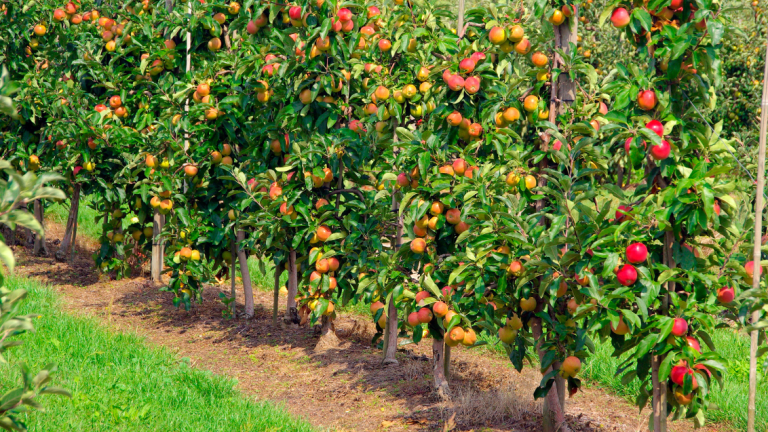
Research1 has shown that any weed growth in the first three months after planting will reduce tree growth. Weeds allowed to grow near new trees will reduce yields even two years later. Weeds compete with trees for water and nutrients and can slow the development of the tree and delay productivity. Weeds can also make the micro-climate more favourable for pests and diseases in both young and established orchards.
To be effective, weed management strategies should utilize a variety of management practices, such as orchard size, tree age, weed spectrum and density, soil type, moisture and under tree management. Good orchard hygiene is always the first step – keeping an eye out for new weeds and working quickly to eradicate or reduce spread, and wherever possible stop weed seed set.
Physical strategies for weed management include cultivation, weed matting, thermal weeding, grazing and mulching. Mulching is the most effective of these and the benefits go far beyond weed control. Mulching under tree rows with straw (or similar) will stop weed growth if applied thick enough to block sunlight. Mulching also increases moisture retention, regulates soil temperature and increases organic matter and soil microbe density.
Chemical herbicides are a cost-effective and reliable strategy for managing weeds in orchards. With an array of herbicides available, knowing how each works helps you get the best out of your herbicide application. Herbicides can be pre-emergent (applied before weeds emerge) or post-emergent (applied after the weed has emerged from the soil).
Syngenta Technical Services Lead Dr Brandy Rawnsley said knowing what weeds are in the orchard is important for product selection. "Growers may need a selective herbicide like FUSILADE® Forte which only controls grass weeds, or maybe they are looking for a product that eliminates all weed types,” she said.
"If using knockdown herbicides, like SPRAY.SEED® or glyphosate, these act quickly and do not have any residual activity."
Residual herbicides remain active in the soil for extended periods and can act on successive weed germinations. Non-residual herbicides, such as the non-selective herbicides paraquat and glyphosate, have little or no soil activity and are quickly deactivated in the soil.
Syngenta offers two powerful post-emergent herbicide options, which can be used in orchards any time from dormancy to harvest. FUSILADE® Forte herbicide (Group 1) is a selective herbicide that provides powerful post-emergent control of couch, many annual grasses and certain perennial grasses in a range of horticultural crops, ornamentals and nursery trees.
"FUSILADE® Forte herbicide has a built-in adjuvant to help with coverage and retention, and is quickly absorbed and translocated to the growing points of weeds," said Dr Rawnsley.
“To be most effective, apply FUSILADE® Forte to young, actively growing weeds at 2-5 leaf stage before tillering. The advanced formulation containing surfactants and wetting agent, ensures uniform distribution.
“Good coverage of weeds is essential, and should be matched to the weeds being sprayed, using water rates greater than 200 L/ha.
“In orchards, your spray should be directed at the base of the tree, and you should avoid spraying any foliage of the tree wherever possible. Although FUSILADE® Forte is specific to grasses, it is important not to spray over the top of young trees, or over many nursery, native or ornamental trees.”
FUSILADE® Forte herbicide should not be applied to weeds that are not actively growing, under stress or to flowering weeds. FUSILADE® Forte herbicide has no withholding period in stone fruit, pome fruit, citrus or avocado when used as directed.
“FUSILADE® Forte herbicide can be applied at any stage throughout the year, when weeds are small, and is rainfast in 1 hour, which is significantly better than other some other grass selective herbicides,” said Dr Rawnsley.
“FUSILADE® Forte is the perfect solution to control grass weeds and offers the flexibility to be tank-mixed with a post-emergent broadleaf herbicide if required.”
A double knock approach uses two different modes of action, to stop hard to control weeds and any weeds from setting seed.
“A double knock strategy can be done with SPRAY.SEED® herbicide when weeds are young and actively growing in late winter or early spring. The SPRAY.SEED® causes rapid burn of green growth before hitting any new shoot growth with FUSILADE® Forte herbicide approximately 50 to 70 days later, when the new growth is approximately 5 cm in length.”
SPRAY.SEED® herbicide (Group 22) is an ideal partner with FUSILADE® Forte. It is unrivalled for its speed of action to kill a wide range of both grass and broadleaf weeds in orchards. With specific strategies on label for avocados, mangoes, walnuts, pistachio and hazelnuts, SPRAY.SEED® herbicide is safe on perennial crops. It is rapidly absorbed, rainfast within 30 minutes and contact activity provides fast knockdown.
“One major advantage of SPRAY.SEED® herbicide is that it has no soil activity so it can be used around trees without risk of root absorption,” said Dr Rawnsley.
For optimal effectiveness, apply SPRAY.SEED® herbicide to small, actively growing weeds using a water volume that thoroughly covers all of the foliage. The formulation delivers adequate adjuvant when SPRAY.SEED® herbicide is applied at 2.4 L/ha in 200 L of water, however it is advised to add an adjuvant such as AGRAL® spray adjuvant or BS1000* as per the label directions when using higher water rates.
Effective weed management relies on understanding the weed spectrum and orchard characteristics and integrating appropriate hygiene, physical and chemical strategies to suit. It is important to select herbicides based on the specific weed profile of the orchard, maintain and calibrate application equipment and adhere to label directions for application to achieve the most effective weed control.
® Registered trademark of a Syngenta Group Company.
* Registered trademark
References:
1. University of California (UC) IPM Pest Management Guidelines: Almond. UC ANR Publication 3431 (2017)
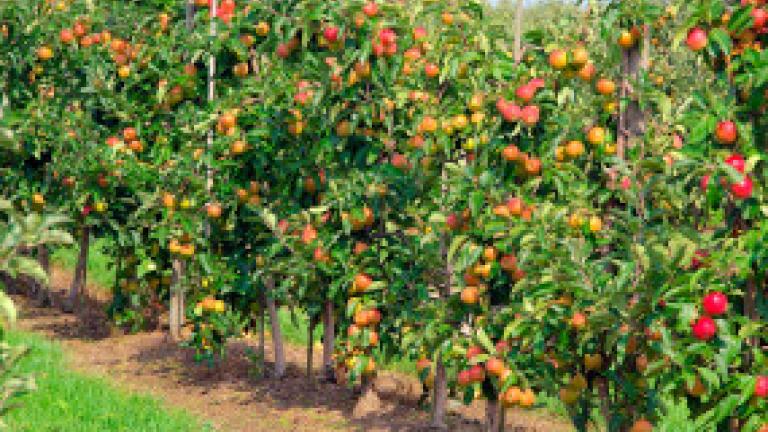
Photo 1. FUSILADE® Forte herbicide can be safely applied around the base of trees.

Photo 2. SPRAY.SEED® herbicide manages difficult to control weeds via double-knock applications.

ENDS
Syngenta is a leading agriculture company helping to improve global food security by enabling millions of farmers to make better use of available resources. Through world class science and innovative crop solutions, our 28,000 people in over 90 countries are working to transform how crops are grown. We are committed to drive positive change in agriculture and embed sustainability across all aspects of our business.